How Long Does a Pool Liner Last? Lifespan by Type
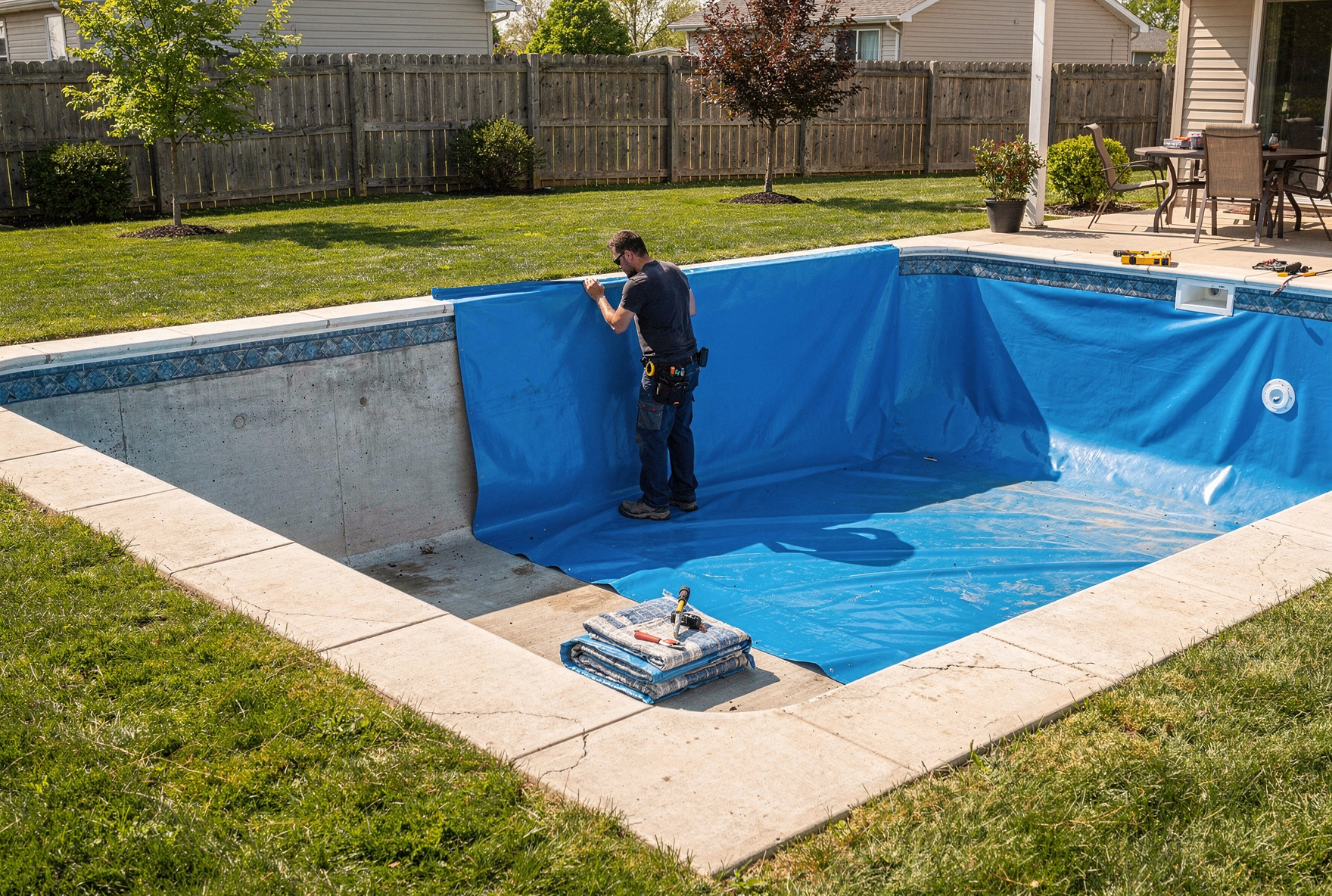
How Long Does a Pool Liner Last? Lifespan, Threats & Signs to Replace
How long does a pool liner last? Most vinyl pool liners last between 6 and 12 years if you stay on top of maintenance. With excellent care, some reach 15 years, but that's uncommon.
You can squeeze a bit more life out of yours with a few smart habits, but you'll still want to plan for replacement. Here's what affects liner lifespan, the warning signs to watch for, and how to get the most years out of the liner you have.
What Is a Vinyl Pool Liner?
Think of your pool liner as the smooth, waterproof skin that keeps water in and protects the pool structure. Many in-ground pools and nearly all above-ground pools use vinyl because it's affordable, comes in lots of colors and patterns, and isn't too fussy to install.
Liners come in different thicknesses, measured in mils. Common options are 20, 27, 28, and 30 mil. Even the best liner won't last forever, so planning ahead saves you from emergency repairs in the middle of swim season.
How Long Does a Pool Liner Last by Type?
Most liners fall in the 6-to-12-year range. Where yours lands depends on the liner type, how it was installed, your climate, and how much the pool gets used.
- Inground vinyl, 20 mil (standard): Typically lasts 6–12 years. Main threats are punctures from toys, tools, and pet claws, UV fading, and unbalanced water chemistry.
- Inground vinyl, 27–30 mil (thicker): Typically lasts 6–12 years, more often toward the upper end with good care, and up to about 15 years in rare cases. Main threats are poor fit or rushed installation, UV exposure, and over-chlorination.
- Above-ground vinyl: Typically lasts 6–10 years. Main threats are sun exposure, sharp objects, wall or bead slippage, and winter damage.
- Any liner in a frequently hosted pool: Expect the lower end of its range. Main threats are heavy foot traffic, more toys and floats, and faster chemical swings.
What Changes Your Liner's Lifespan
- Material and installation: Thicker liners (like 27 mil) usually hold up longer than thinner 20-mil liners against scrapes and punctures. But installation matters just as much: a well-fitted 20-mil liner can outlast a poorly installed thicker one.
- Climate: Strong sun ages vinyl faster. In cold climates, freeze-and-thaw cycles add stress, especially if the pool isn't winterized properly.
- Usage: If your pool gets a lot of use, like when you host Swimply guests often, expect more wear and tear than a pool used only by your family.
- Care: A consistent care routine is the single biggest thing you control.
If your pool gets party-level use every week, plan for the lower end of the range. That's not a bad thing. Just build it into your budget so the replacement doesn't catch you off guard.
What Shortens a Pool Liner's Life?
Certain things wear vinyl down faster than others:
- UV rays: Sunlight breaks down vinyl, causing fading and cracks. A pool in full sun ages faster. A solar blanket or cover helps block UV when the pool isn't in use.
- Water chemistry: Too much chlorine or pH that's out of range can leave a liner stiff, brittle, or faded. Test your water regularly.
- Sharp objects: Toys, cleaning tools, and pet claws can puncture or scratch the liner. One bad rip can mean a full replacement.
- Heavy traffic: More swimmers means more wear, especially on steps, benches, and the shallow-end floor.
- Skipped winterization: In cold areas, a pool that isn't closed properly is more exposed to freeze damage.
The good news is that most of these are within your control with a solid routine and clear house rules for guests.
Signs It's Time to Replace Your Pool Liner
Don't let your liner fail mid-summer. Watch for:
- Faded or patchy color: Washed-out vinyl is weakening vinyl. This is often the first warning sign.
- Wrinkles or loose spots: A healthy liner is smooth. Bunching or bumps that won't settle mean the vinyl is breaking down.
- Cracks or small tears: Little cracks can turn into big leaks fast, especially ones that come back after patching.
- Water level keeps dropping: If you keep topping up and can't find a plumbing leak, the liner is a likely culprit.
- Bead problems: If the liner keeps pulling out of the track at the top, it's past its prime.
Spot one or two of these? Start planning your replacement before it turns into an emergency.
How to Make Your Pool Liner Last Longer
You won't get forever, but you can add years with a few easy habits:
- Keep water balanced: Test weekly and keep pH between 7.2 and 7.6. Avoid over-chlorinating, which dries out and discolors vinyl.
- Use a pool cover: Covers block UV and keep debris out. Cover the pool when you're not swimming or hosting.
- Clean gently: Use soft brushes. Skip sharp or abrasive tools that scratch and weaken the surface.
- Remove hazards: Check for anything that could scratch the liner, like sharp-edged toys or cleaning equipment, before guests arrive.
- Keep the water level right: Too low lets exposed vinyl dry out and crack. Too high can stress the seams.
- Never drain it completely: A fully drained liner can shrink or shift, and it may not go back into place.
- Winterize properly: If you get freezing winters, close the pool correctly each season.
These steps won't make replacement unnecessary, but they'll help you get every year out of the liner you have.
Planning Ahead for Liner Replacement
Smart pool owners don't wait for a failure. Once your liner is past the six-year mark, start budgeting and watching for warning signs.
For current price ranges by pool type, what's included in a quote, and how to save, see our pool liner replacement cost guide.
Timing tips:
- Cold-winter areas: Schedule the replacement off-season, before you or your guests need the pool.
- Warm-weather markets: Look ahead for a quiet stretch, block it off on your calendar, and get the job done before demand picks back up.
Pool Liner Lifespan FAQ
How long does a pool liner last in an inground pool?
Most inground vinyl liners last 6 to 12 years. With careful water chemistry, UV protection, and gentle cleaning, some reach about 15 years, but that's uncommon. Heavily used pools tend to land at the lower end.
How long does an above-ground pool liner last?
Above-ground pool liners typically last 6 to 10 years. Sun exposure, sharp objects, and winter damage are the most common reasons they fail early.
Does a thicker pool liner last longer?
Often, yes. Thicker liners, like 27 or 30 mil, resist punctures and scrapes better than standard 20-mil liners. But installation quality matters just as much. A well-fitted 20-mil liner can outlast a poorly installed thicker one.
Can you patch a pool liner instead of replacing it?
Yes, if the damage is small and isolated and the liner is otherwise in good shape. If tears keep coming back, the vinyl is brittle or faded, or the liner is around eight years old with several patches already, replacement is usually the smarter move.
Does renting out my pool wear out the liner faster?
More swimmers mean more foot traffic, toys, and chemical swings, so a frequently hosted pool will usually land at the lower end of the lifespan range. Set house rules on toys and sharp objects, keep water balanced between bookings, and budget for replacement a little sooner.
Plan for It, and Let Your Pool Help Pay for It
Your vinyl liner isn't forever, but with good care you can push it toward the 12-year mark. The trick is combining regular maintenance, a replacement budget, and smart scheduling so you never lose valuable pool time.
If you're thinking about the cost of a new liner, your pool can help cover it. When you become a Swimply host, you set your own price, hours, and rules. Pools on Swimply usually list for $25 to $100 per hour, and hosts keep 70% to 80% of their booking earnings. Every booking is backed by the Swimply Protection Guarantee, with up to $1 million in liability coverage and up to $10,000 in property damage protection, secondary to your own insurance.
Take care of your liner, and it'll take care of your side hustle.