The 2026 Charlotte Pool Owner's Guide: Care, Costs, & Rules
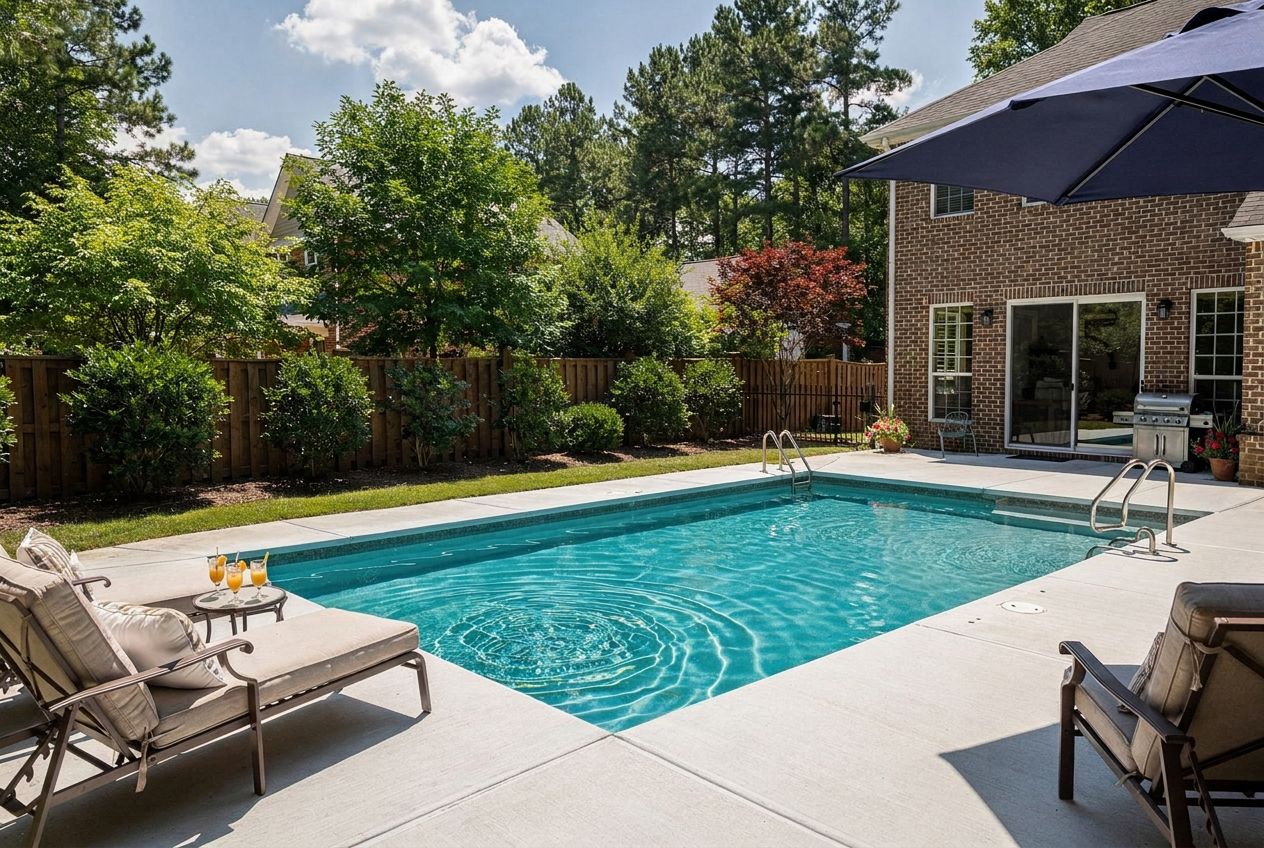
Charlotte pool owners have a real advantage. The swim season lasts longer, and warm weather gives you months to cool off at home or even earn money by hosting guests. But keeping a pool sparkling in Charlotte's special climate means dealing with heat, humidity, pollen, storms, and local regulations right from the start.
Read on to learn how to handle Charlotte's unique pool needs so you can enjoy more swim days and even put your pool to work for you.
What Makes Pool Ownership in Charlotte Different
Charlotte's weather keeps pool owners busy. Summers scorch, boosting chlorine use and helping algae grow fast. Pollen counts are among the nation's highest. Heavy spring drops can clog filters in two to three days.
Thunderstorms pop up almost daily from late spring to fall. Rain dilutes pool chemicals and throws in plenty of mess. Charlotte's red clay means bad drainage and muddy equipment pads. Trees bring big leaf drops in fall. You still need winter protection because freezing nights hit pipes and equipment some years.
The upside is a longer swim season than most places, so you get more splash time. List your pool, and you can earn income for more months than in cooler cities.
Charlotte Pool Chemistry Basics
Balance pool chemicals to protect swimmers, your equipment, and your investment. Levels swing fast in Charlotte, so know these targets:
- Free chlorine: Keep it at 2–4 ppm. Sun and heat burn it off quickly.
- pH: Aim for 7.2 to 7.6. Rain lowers pH. Bathers and hot days push it up.
- Total alkalinity: Stay between 80–120 ppm to keep pH from wild swings.
- Cyanuric acid (CYA/stabilizer): Use 30–50 ppm for chlorine pools and 60–80 ppm for saltwater. Stabilizer stops sun from eating chlorine too fast. Don’t go over 100 ppm, or chlorine won’t work right.
- Calcium hardness: Increase for plaster and concrete pools. Fiberglass and vinyl need less.
Saltwater pools still need regular tests. The salt cell makes chlorine, but pH, alkalinity, CYA, and calcium still drift.
How Often to Test Pool Water in Charlotte
Test two to three times a week in blazing summers or after storms, parties, or pollen storms. Weekly testing is fine during spring and fall when things settle down.
Test strips are great for fast checks. Every few weeks, run a full test kit or have the pool shop check a sample. Keep a simple notebook. It helps spot problems before they get big.
Common Chemical Problems in Charlotte Pools
Storms often leave pools cloudy. Hot spells and low chlorine spark algae blooms. Rain shifts pH lower. You can fix these fast if you spot them quickly.
Pollen in spring coats pools and looks like algae, but it floats on top and forms a film. Skim, brush, and clean filters (don't just shock.) Pollen doesn’t disappear with more chemicals.
Iron and manganese in fill water cause staining if chemistry drifts for too long. Only shock when it’s needed. Fix the real problem, circulation and balance, so you’re not just wasting chemicals.
Seasonal Pool Care Calendar for Charlotte
With Charlotte’s long swimming season, divide pool jobs by season to make things simple.
Spring: Opening, Pollen, and Prep
- Open before the first heatwave.
- Clean covers, decks, skimmers, and filters.
- Start skim and filter season for heavy pollen.
- Balance chemicals before pool parties kick off.
- Inspect pumps, heaters, ladders, lights, and safety barriers.
- Fix cracks or broken latches now, not when the pool is crowded.
Summer: Heat, Storms, and Heavy Use
- Run pumps longer as temps climb. Use one hour for every ten degrees of water temp.
- Test water more often in heat waves.
- Brush steps, corners, and walls to keep algae from starting.
- After storms, empty baskets, top off water, and rebalance chemicals.
- Shock pool only after big storms or parties, not every week.
- Set pool rules ahead of big groups so everyone knows what’s okay.
Fall: Leaves, Cooling Water, and Equipment Checks
- Keep skimming and vacuuming, because fallen leaves rot fast in warm water.
- Trim branches hanging over the pool.
- Drop pump hours as water cools.
- Check how clogged the filter got over summer.
- Decide if you want to keep swimming or start closing the pool for winter.
Winter: Freeze Protection and Off-Season Care
- Use freeze protection settings on equipment if you have them.
- Keep water topped up for your system’s needs.
- Check for freeze damage after cold snaps and storms.
- Even in winter, check chemicals every two weeks. Algae grows slower but still sneaks in.
Charlotte Pool Laws, Permits, and Local Rules to Know
Charlotte, Mecklenburg County, and other towns like Concord, Huntersville, or Matthews each have different pool rules. Check with local permit offices before making changes or building. HOAs might have extra rules for fences, greenery, noise, parking, lighting, and guest use.
Permits for New Pools and Major Pool Work
- New in-ground pools need Mecklenburg County Public Health approval and a building permit from LUESA.
- Charlotte also requires a Zoning Use Permit for most residential pools and fences.
- Some above-ground pools need permits, depending on size, depth, decking, and utilities.
- Electric or gas hookup for pumps, heaters, or outdoor kitchens must get permitted first.
- Don’t forget to check on deck, patio, wall, or drainage projects.
Fence, Gate, and Barrier Requirements
- Pools holding over 24 inches of water must have a safety barrier at least 48 inches tall.
- Openings should be too small for a 4-inch ball, with less than 2 inches under the fence.
- Gates need self-latching, self-closing hinges, and hardware at least 54 inches from the ground.
- Doors from the house leading to the pool must have alarms or high latches if they count as part of the barrier.
- Keep locks and alarm batteries working throughout the year.
Setbacks, Easements, and Yard Layout
- Charlotte setbacks: usually 5–10 feet in the back, 5 feet at the side.
- Never build pools or decks inside a drainage or utility easement.
- Plan for drainage since Charlotte’s red clay holds water and slopes can steer runoff where you don’t want it.
- Watch out for roots or walls that could slow progress or create future problems.
Pool Water Discharge and Stormwater Rules
- Never drain pool water straight into streets, creeks, or neighbor’s yards.
- Dechlorinate before draining. Mecklenburg County lets you drain pool water only when the chlorine is gone.
- Don’t let chemical-rich or salty water reach storm drains.
- Always check Charlotte and local utility guidelines first.
Noise, Parking, and Neighbor Considerations
- Mechanical noise in residential areas can’t run from 9 PM to 7 AM.
- Sunday–Thursday: No loud music from 9 PM to 9 AM. Friday–Saturday starts at 11 PM.
- Fines start at $100 for breaking noise limits. Repeat violations get really expensive.
Common Charlotte Pool Problems and How to Handle Them
Pollen on the Pool Surface
- Pollen shows up as a yellow or dusty film in spring. It’s not algae.
- Pollen floats or settles on the waterline. Skim daily, brush walls, and clean filters.
- Enzyme products can help break down the gunk for some owners.
- Adjusting chemical levels won’t make pollen disappear by itself.
Algae After Heat and Rain
- Hot water plus sun plus low chlorine leads to green water fast.
- Brush shady spots and steps first.
- Test water, then shock as needed. Clean the filter after treatment.
- If algae keeps reappearing, check if dead zones are missing circulation.
Storm Debris and Cloudy Water
- Pick out leaves and debris right after storms hit.
- Check and top up water after big rain. Chemicals can dilute fast.
- Test balance, run the pump longer, and clean skimmer baskets.
- If water’s still cloudy, clarifiers may help but fix chemicals first.
Drainage and Red Clay Soil Issues
- Clay soil holds water and can shift patios or decks over time.
- Look out for muddy patches and standing water after heavy rain.
- Get ahead with French drains, channel drains, catch basins, or dry wells.
- Check that runoff can’t reach your pool or equipment pad.
Equipment Strain During Peak Summer
- Hot months mean pumps work longer and filters clog faster.
- Watch pump gauges and clear baskets often.
- Keep equipment shaded and make sure there’s airflow.
- Book equipment service before July and August rush hits.
How Much Pool Maintenance Costs in Charlotte
- Annual pool ownership runs $3,000 to $6,000 for a typical Charlotte pool.
- Regular cleaning, chemical costs, repairs, and equipment upkeep are included in that range.
- Add $500 to $1,200 each year for a pool heater.
- Budget $5,000 total to cover a standard pool’s likely all-in costs.
- Professional pool cleaning runs $30 to $250 per visit.
- Open or close the pool seasonally for $200 to $400.
- Salt cell replacements can cost $400 to $1,600. Vinyl liners, replaced every ten years, run $1,800 to $4,100.
- Larger or older pools, concrete types, and heavy use mean more maintenance.
Turning Your Private Charlotte Pool Into Extra Income
Many pools in Charlotte stay unused for weeks, but you can earn money by renting out your pool to guests on Swimply. Swimply connects homeowners with people searching for private swim space by the hour.
- Hosts set prices, house rules, and schedule.
- Most Charlotte Swimply pools book for $25–$100 per hour. Average is around $45 an hour and five to eight guests per reservation. Most bookings last two hours.
- Swimply handles payments. Public and commercial pools aren’t allowed, just private homes.
- Hosts keep 80–85% of the booking fee. The Swimply Protection Guarantee adds $1 million in liability coverage, plus $10,000 for damages per booking.
- As of July 1, 2025, Mecklenburg County allows short-term pool rentals, so it’s completely legal for private pool owners to host.
Why Hosting Makes Sense in Charlotte
- Long Charlotte summers mean more hosting and more income, up to $3,000 a month in peak season.
- Public pools are busy, hotel pools aren't private, and families want a clean backyard pool with rules and amenities.
- Hosting helps cover cleaning, repairs, and utility costs each year.
Your Backyard Can Do More Than Sit Pretty
Charlotte pool owners face heat, pollen, storms, water chemistry swings, and plenty of local rules. With regular care, your pool’s a big perk and not just a pretty sight for the grass. You can turn an underused pool into a relaxing hangout or a serious income boost.
Want to see what your pool could earn? Sign up to be a Swimply host today!