How to Winterize an Above Ground Pool: 9 Simple Steps
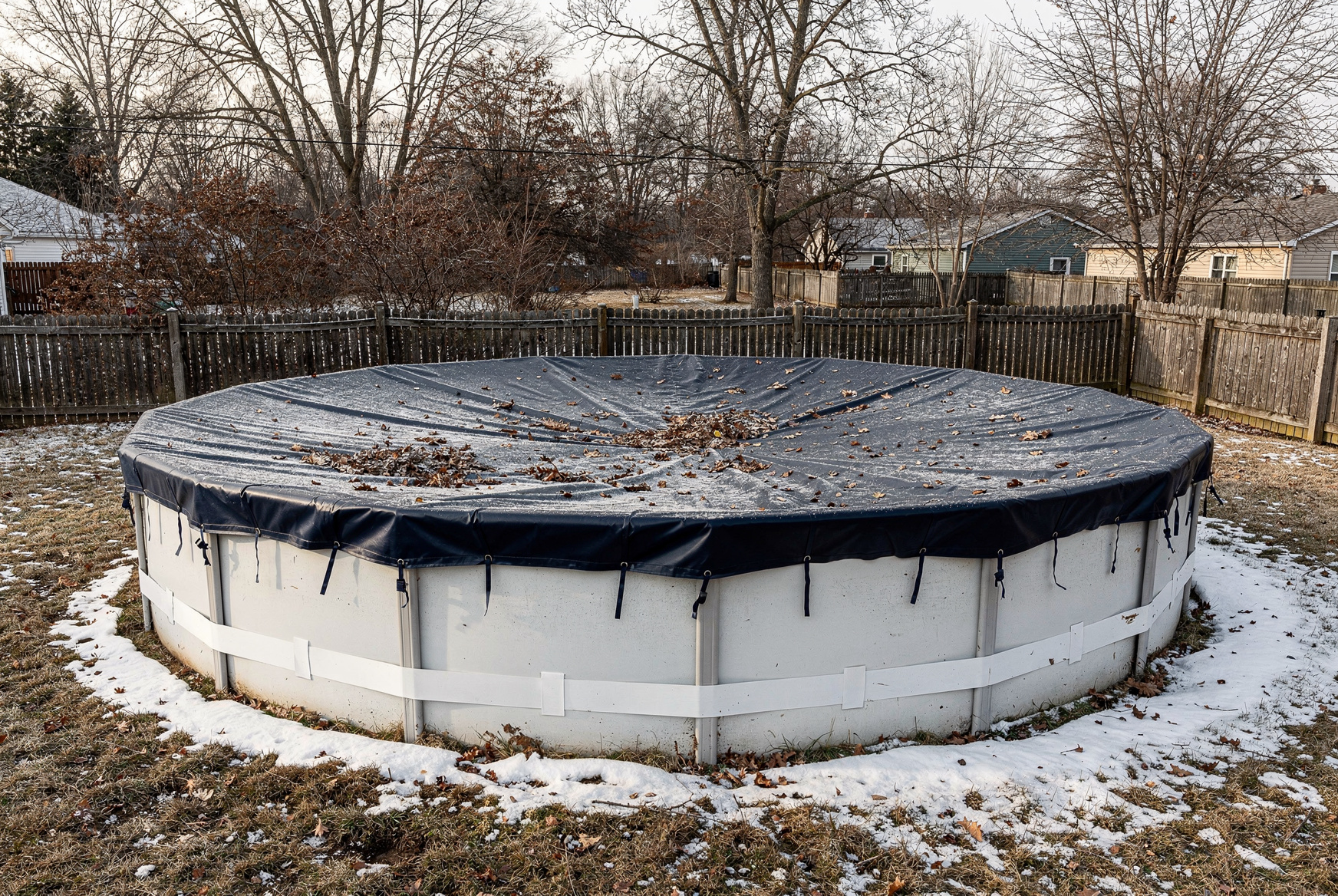
Winterizing an above ground pool keeps equipment safe, water clear, and prevents issues in spring. The steps are simple and you’ll save money and headaches by following a smart routine before cold weather hits.
All you need to do is clean the pool, balance the water, lower the water level, protect the plumbing, remove equipment, add winter chemicals, place an air pillow, and secure a winter cover. Miss these and you could end up with cracked equipment, green water, or expensive spring cleanup.
Skipping any steps means frozen pumps, torn liners, or opening to a swamp in April. These easy tips make sure your pool’s ready for winter, so opening in spring goes smoothly.
How to Winterize an Above Ground Pool: Easy Steps
Winterizing an above ground pool means finishing a few specific tasks in order:
- Clean the pool well.
- Balance the water.
- Lower the water below the skimmer or put on a cover.
- Disconnect and drain the pump, filter, and hoses.
- Add winter chemicals.
- Plug all the openings.
- Put an air pillow in the center.
- Install and secure a winter cover.
These steps protect the liner, frame, plumbing, and water quality through winter.
Don’t drain the pool completely. Water supports the liner and walls, so unless the manufacturer says otherwise, keep most of the water in.
Quick Step-by-Step Summary
- Skim, brush, and vacuum the pool.
- Test the water and adjust pH, alkalinity, and sanitizer.
- Add winter chemicals a few days before closing.
- Lower the water below the skimmer or use a cover.
- Disconnect and drain all equipment.
- Plug the return and skimmer openings.
- Put an air pillow in the center.
- Secure the winter cover.
- Check the pool every few weeks during winter.
Why Above Ground Pools Need Extra Care
Above ground pools face harsh cold because their walls, liners, and equipment sit above ground and exposed. Cold, wind, and ice can cause more damage if you skip winterizing.
Finishing all the prep means you’ll avoid cracks, liner damage, and tough cleaning in spring.
When Should You Close an Above Ground Pool for Winter?
Close the pool after swimming season when water is around 65°F or cooler. Closing too early risks algae. Closing too late means freeze damage could happen.
Region matters. Pools close earlier in cold spots and later where it’s warmer.
Best Water Temperature Range
Shut things down when the water stays between 50°F and 65°F. Cooler water slows algae and helps your winter chemicals last all season.
Regional Timing
- Northern pool owners often close in early to mid-fall, usually by end of September.
- Warmer regions wait until later in October or may not close at all.
- Use your climate as a guide.
Weather Signs to Watch
- Keep an eye out for cool nights and leaves starting to drop.
- Stop swimming when the water is cold daily.
- Don’t wait for a hard freeze to close.
- If nighttime temps dip below freezing, close right away.
What Supplies Do You Need Before You Start?
Gather all the supplies before you start. This way you won’t need to stop partway through. Double-check your pool manufacturer’s instructions first, too.
Cleaning Supplies
- Skimmer net
- Pool brush
- Vacuum
- Filter cleaning gear
Water Care Supplies
- Test strips or a test kit
- pH adjuster and alkalinity adjuster
- Sanitizer or shock
- Algaecide
- Winter chemical kit
Cover and Protection Supplies
- Winter cover
- Air pillow
- Cable and winch
- Cover clips
- Winter plugs
- Skimmer cover or plate
- Labeled storage bin for small parts
How Do You Clean and Balance the Water Before Closing?
Start by cleaning the pool. This makes sure winter chemicals can reach every spot and stay active all season. Skim leaves, brush walls, vacuum the floor, and clean the filter. Then, test and balance pH, alkalinity, and sanitizer.
Remove Leaves and Debris
Get all leaves and organic debris out so you avoid stains, algae, and an unpleasant spring mess. A clean pool over winter means less work later.
Brush and Vacuum the Pool
Brush the walls, seams, and corners. Vacuum the floor and check ladders and steps for hidden dirt.
Balance pH, Alkalinity, and Sanitizer
Keep the water in these ranges for winter:
- pH: 7.2 to 7.6
- Alkalinity: 80 to 120 ppm
- Calcium hardness: 180 to 220 ppm
Check the test kit and chemical labels for exact steps. Local pool stores can help if needed.
Clean the Filter
Rinse or clean the filter depending on its type. Get rid of dirt and buildup before winter so things stay fresh and ready in spring.
How Far Should You Lower the Water in an Above Ground Pool?
Lower the water just below the skimmer or return opening, unless a skimmer cover lets you leave more. This protects plumbing but still supports the liner and walls.
Always follow your pool, liner, skimmer, and cover maker’s instructions.
Don’t Drain the Pool Completely
Don’t empty the pool. Draining fully can cause metal walls to collapse and destroy the liner. Keep water in to prevent shrinking, brittleness, and tearing.
Skimmer Plate Option
Using a skimmer cover or plate blocks water from the skimmer during winter. This allows you to keep the water level higher for better support under your winter cover.
Return Line and Plug Placement
Remove the return fitting if needed, then install a winter plug. A snug plug stops water from sneaking into the line and freezing.
How Do You Protect the Pump, Filter, Hoses, and Plumbing?
Protect the pool equipment by shutting everything off, disconnecting hoses, draining all water, and storing removable parts somewhere dry. Frozen water inside equipment causes cracks and pricey damage.
Always check your model’s manual just in case.
Shut Off and Disconnect Equipment
- Turn off the power before touching anything.
- Disconnect hoses from skimmer, return, pump, and filter.
Drain the Pump and Filter
- Remove the drain plugs from pump and filter.
- Let all the water out.
- Store the plugs in a safe spot or place them in the strainer basket for easy access later.
Store Hoses and Fittings
- Drain hoses fully.
- Coil them loosely.
- Store all fittings in a labeled bin so nothing gets lost or damaged over winter.
Handle Ladders and Accessories
- Remove ladders, floats, toys, cleaners, and removable steps.
- Clean and dry everything before storage so there’s no mold or mildew in spring.
How Do You Add Winter Chemicals and Cover the Pool?
Add winter chemicals as the label says. Place an air pillow in the center, then put on the winter cover. Adding chemicals a few days before gives the pump time to circulate them.
Follow label directions for each step.
Winter Chemical Basics
- Sanitizer and algaecide keep water clean all season.
- Winter kits usually include shock, algaecide, and stain preventer.
- Never mix chemicals unless the label says it’s safe.
Air Pillow Placement
- Inflate the air pillow to about 60–80% so it gives when ice builds up.
- Tie the pillow in the center with ropes attached to the pool’s edge.
- The pillow keeps weight off the cover and helps protect the pool walls.
Winter Cover Fit
- Pull the cover over the air pillow and pool.
- Tighten it gently using the cable and winch.
- Add clips or a wrap for extra hold if your winters are windy.
What Mistakes Should Pool Owners Avoid?
Some mistakes cost more work or money when you open in spring. These are the top things to watch for and how to avoid them.
- Never close the pool dirty. Leaves and gunk become stains or smelly problems when the cover comes off.
- Don’t skip water tests. Guessing at levels makes it tough to keep water clear and safe all winter.
- Always drain every bit of water from equipment. One missed spot can crack a pump or hose.
- Don’t skip winter checkups. A loose cover, heavy leaves, or a sunken air pillow can spell disaster later.
Frequently Asked Questions
Can you leave an above ground pool up all winter?
Yes, above ground pools are built to stay up all winter if they’re winterized and covered right. Keep the water up to support liner and walls. Draining it is what leads to damage.
Do you need an air pillow for an above ground pool?
An air pillow is a must because it helps manage ice pressure and keeps the cover afloat. Many cover warranties even require one. Skipping it risks costly damage.
Should you run the pool pump after adding winter chemicals?
If equipment’s still hooked up, running the pump for a bit helps mix the chemicals fully. Check chemical labels for instructions and make sure to finish before freezing weather starts.
Can you use a regular tarp as a winter pool cover?
A regular tarp doesn’t fit right and won’t last through winter. Pool covers are made to handle snow and ice and fit safely with cables. It’s worth getting a proper cover.
How often should you check a covered pool in winter?
Check every few weeks and after storms. Make sure the cover, cable, pillow, and water level look right and clear off heavy leaves or water so nothing shifts or sinks.
Get More From Your Pool with Swimply
Swimply is an online marketplace that lets you rent out your private pool by the hour. Think of it as a booking platform specifically designed for backyards and swimming pools. It connects people looking for a quick swim with pool owners who want to earn extra cash.
Getting started as a Swimply host is incredibly easy and entirely on your terms.
- You set your own hourly rate based on your location and pool features.
- You create a custom schedule so guests only book when it's convenient for you.
- You establish specific house rules to ensure guests always respect your property.
- You review and approve every single reservation request before anyone arrives.
Pool maintenance requires a serious financial commitment every single month. Buying balancing chemicals, running the pool pump, and paying for professional cleaning services adds up very fast. Hosting on Swimply provides a straightforward way to offset these steep ownership costs so you don't feel the financial strain.
You can easily use your hosting earnings to pay for your monthly water and electricity bills. Many hosts even make enough profit to fund expensive upgrades like new heaters or patio furniture. It's a fantastic way to turn a costly backyard feature into a highly profitable asset.
Make Pool Ownership Feel More Worth It
Winterizing keeps your pool safe and cuts down on spring headaches and costs. Yet pool care costs stick around year-round. Offsetting costs during swim season helps make ownership easier.
Swimply lets pool owners rent their pools by the hour to guests looking for swims, parties, pet fun, or relaxation. With over 4 million visits hosted, it’s an easy way to earn from a pool that would otherwise sit unused.
When the season ends, it’s simple to pause your listing and restart in spring. Ready to make the pool pay for itself? Become a Swimply host and start offsetting pool costs today.