How to Drain a Pool: Safe Steps for Every Pool Owner
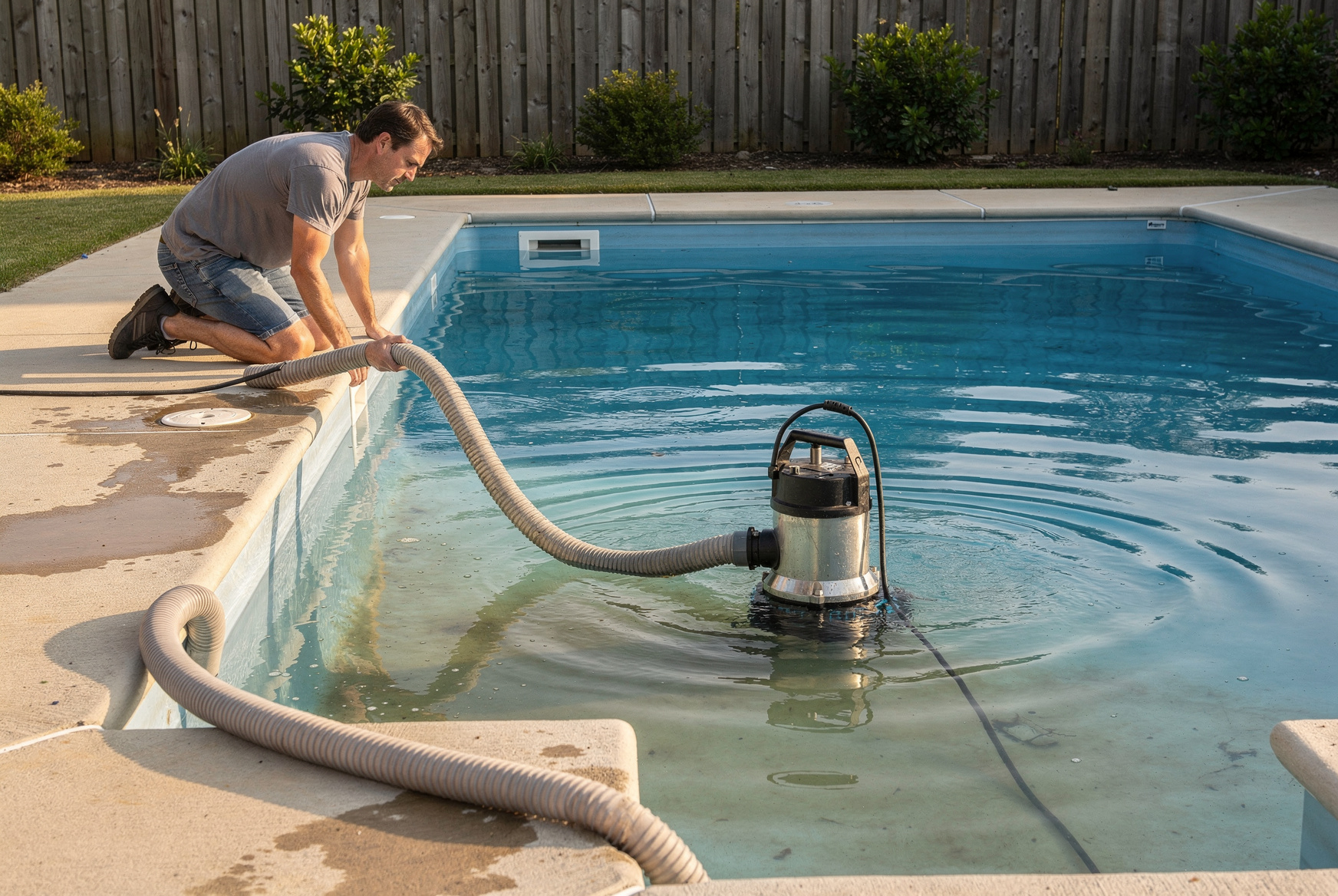
Draining a pool the right way keeps your equipment safe, helps avoid damage, and protects your yard and neighbors from flooded messes. The best methods are a submersible pump, your pool’s filter pump (if possible), or a siphon using a garden hose.
Don’t rush it. Always check local drainage rules, watch the weather, and keep an eye on everything until the last drop is out. Careful draining saves time and money in the long run.
Here’s how to drain a pool, both with pumps and hoses, where to send the water, what to expect for timing, and what to do next.
Should You Fully Drain Your Pool?
Most owners don’t need to fully drain a pool unless there’s a serious repair or water problem. Usually, a partial drain solves issues with water chemistry or clarity.
- Only fully drain for repairs, resurfacing, stubborn stains, or big algae problems.
- High levels of TDS or stabilizer often only need a partial drain.
- Full drains are risky for vinyl liners, fiberglass, and places with high groundwater.
- Most pros suggest a complete drain only every 3-5 years.
What Should You Check Before Draining Your Pool?
Get ready before draining. A little prep stops big headaches like cracks or flooded lawns.
- Check city or county rules for pool water disposal.
- Turn off all pool equipment so nothing runs dry.
- Lower chlorine if local rules require it. Some want it near zero first.
- Pick an outlet that won’t flood yards, basements, or streets.
- Check the weather and ground. Never drain after heavy rain.
Emptying an in-ground pool on saturated ground can make the shell pop from underground pressure. Always check ground conditions first.
How to Drain a Pool With a Pump?
Using a pump is the fastest method for most pools. Submersible pumps work great for deep ends and large volumes. Pool filter pumps with waste settings work if your system allows it.
Submersible pump method
- Place the pump on a flat spot in the deep end.
- Connect a discharge hose tightly to the pump outlet.
- Send the hose to your approved drainage area.
- Plug the pump into a safe, outdoor outlet.
- Watch the water level and move the pump before it runs dry.
Submersible pumps overheat fast if they run with no water, so keep checking on it. Damaged motors are costly.
Pool filter pump method
Only use this method if your system has a multiport valve with a waste or drain setting. With the pump off, turn the valve to waste. Then switch the pump back on.
Never move the valve while the pump is running. Water usually stops flowing below the skimmer unless your system pulls from a main drain. Not sure? Don’t risk it.
Partial drain vs. full drain
- For chemistry issues, drain one-third to one-half the pool.
- Repairs may need more water removed depending on the job.
- Full drains need extra care. Get a pro for in-ground pools if you’re unsure.
Equipment watchouts
- Never run pumps dry.
- Keep hoses untangled and flat.
- Keep cords away from puddles and rain.
- Stop draining if the pump strains, hoses kink, or water backs up.
How Do You Drain a Pool With a Garden Hose?
The garden hose method works for above-ground, small, or partially draining pools. Gravity does the work. It’s slower but simple and safe for minor jobs.
- Fill a hose completely with pool water.
- Seal one end with your thumb or a cap.
- Keep the outlet end low in the pool.
- Move the capped end to a spot lower than the pool’s water line.
- Release and let gravity pull water out.
This method takes longer than a pump. Multiple hoses speed things up if your drainage system can handle extra water.
- For faster draining, use two or more hoses.
- Keep hose ends inside the pool weighted down.
- Monitor the outflow so you don’t flood the wrong area.
- Good for lowering water after rain.
- Ideal for prepping pool for maintenance.
- Handy for draining small above-ground pools.
It’s not a good choice for draining large in-ground pools or for time-sensitive work.
Where Should Pool Water Drain?
Always drain pool water to an approved spot. Never send it to areas that can’t handle the flow or where rules forbid it. Fines and damage happen when water goes the wrong place.
- Sanitary sewer cleanouts work if allowed by local rules.
- Some cities let you drain to the yard if done slowly and spread out.
- Storm drains may be legal, but only when chlorine is low enough.
- Never let water flood a neighbor’s yard, walkways, or sensitive landscaping.
Local drainage rules
Many areas require chlorine to be very low before draining into street or storm drains. For example, Washington DC limits it to under 0.1 mg/L. HOAs often have their own rules. Respect local laws and neighbors.
Saltwater pool discharge
Saltwater can kill grass and harm soil. A lot of places ban draining salt pools to the ground. Often, saltwater has to go into the sanitary sewer. Always check before draining.
Yard and landscaping protection
- Drain slowly if using the yard.
- Move the hose around so you don’t swamp one spot.
- Keep water away from flowerbeds, tree roots, and foundations.
How Long Does It Take to Drain a Pool?
Pump speed sets the pace. Draining with a strong submersible pump can take 8 to 14 hours for a 15,000 to 20,000-gallon pool. A garden hose may take over a day.
- Pump strength and hose size control speed.
- Longer or thinner hoses take more time.
- Check for kinks or clogs in hoses.
- If water backs up or pools, stop and adjust the drain spot.
Sometimes slower draining is safer. If you see water pooling near your house or on your property, pause and redirect it to avoid damage.
What Should You Do After the Pool Is Drained?
Once the pool is empty, get your work done quickly. Never leave a pool empty longer than needed. The shell can crack, shrink, or shift when exposed to air or pressure changes.
- Finish repairs or cleaning fast while the pool is empty.
- Have supplies and help ready before you drain.
- Keep debris out and protect liners from sharp tools.
Cleaning and repair timing
Don’t drain days in advance. Schedule repairs and cleaning back-to-back. Gaps invite more dirt and risk.
Refill basics
- Use a clean, safe water source.
- Fill to the middle of the skimmer unless your manufacturer says otherwise.
- Watch the level as the pool fills. Don’t let it overflow.
Water balancing
- Test the fresh water for chemicals.
- Balance in this order: total alkalinity, pH, calcium hardness, stabilizer, then chlorine.
- Add each chemical one at a time and run the pump to circulate.
- Aim for free chlorine 1 to 4 ppm and pH 7.2 to 7.8. Retest before swimming.
What Mistakes Should Pool Owners Avoid?
Avoid these common draining mistakes. They can turn a simple drain into an expensive disaster.
- Don’t drain too fast. Fast flows can damage landscaping or surfaces.
- Never drain to the wrong spot or against local laws.
- Don’t run pumps dry or leave them unattended.
- Never leave the pool empty longer than necessary.
Draining after heavy rain
Never drain right after a storm. Wet ground means high hydrostatic pressure. That can lift or float the pool shell and cause expensive repairs.
Ignoring the pool surface
Each pool type has risks. Vinyl liners shrink or wrinkle. Fiberglass moves with ground pressure. Exposed plaster dries out. Keep drain covers and safety devices in good shape. VGB compliant covers are a must and must have no cracks or missing screws.
Skipping a plan
Always plan the method, drainage spot, supplies, timing, and refill before you start draining. Good prep is key.
Frequently Asked Questions
How often should a pool be drained?
Most pools only need a full drain every 3 to 5 years. Many issues can be fixed with a partial drain done every few years, depending on water chemistry and maintenance.
Can you leave a pool empty overnight?
Don’t leave a pool empty unless you have to. In-ground, vinyl, and fiberglass pools can move or get damaged when left empty. Refill as soon as the work’s done.
Can you drain a pool into the street?
It depends on local rules. Some cities allow it, others forbid it, especially with chlorinated water. Always read city or county rules before draining into the street.
Can you drain a pool without a pump?
Yes, a garden hose siphon works for small or partial draining. It’s much slower, but gets the job done if you have patience and the right drainage spot.
Do you need a professional to drain a pool?
Not always. For full in-ground draining, major repairs, or high groundwater, it’s smart to call a pro. If you’re not sure about the plumbing, don’t risk it alone.
Don't Let Your Pool Drain Your Bank Account
Maintaining a swimming pool gets expensive quickly, but it doesn't have to be a financial burden. Swimply is an online platform that lets you rent your private pool by the hour to locals.
Listing a pool on the platform is completely free and takes only a few minutes. You simply create a profile, upload attractive photos of your backyard oasis, and set your own hourly price. You're in complete control because you choose your availability, set house rules, and approve which guests visit.
Becoming a host offers several benefits for your property and your wallet:
- Flexible scheduling: You decide exactly when your pool is open for guests and when it stays closed for personal use.
- Host protection: Swimply provides comprehensive liability insurance and property damage protection for every single booking.
- Passive income: Your backyard generates steady revenue while you relax inside your home or run errands.
- Community connection: You get to provide a fun swimming environment for local families and help them celebrate special occasions.
The extra cash you earn makes pool ownership much more enjoyable and totally stress-free. A busy summer season on Swimply can easily pay for your annual opening and closing services, weekly cleaning fees, and expensive pump repairs.
Make Your Pool Work Harder Between Drains
Pools are a big investment. Regular maintenance is a necessary expense, but there’s a way to offset costs, especially if your pool sits unused.
Check out becoming a host to put your pool to work today.