Pool Filter Sand: How Much Do You Need by Filter Size?
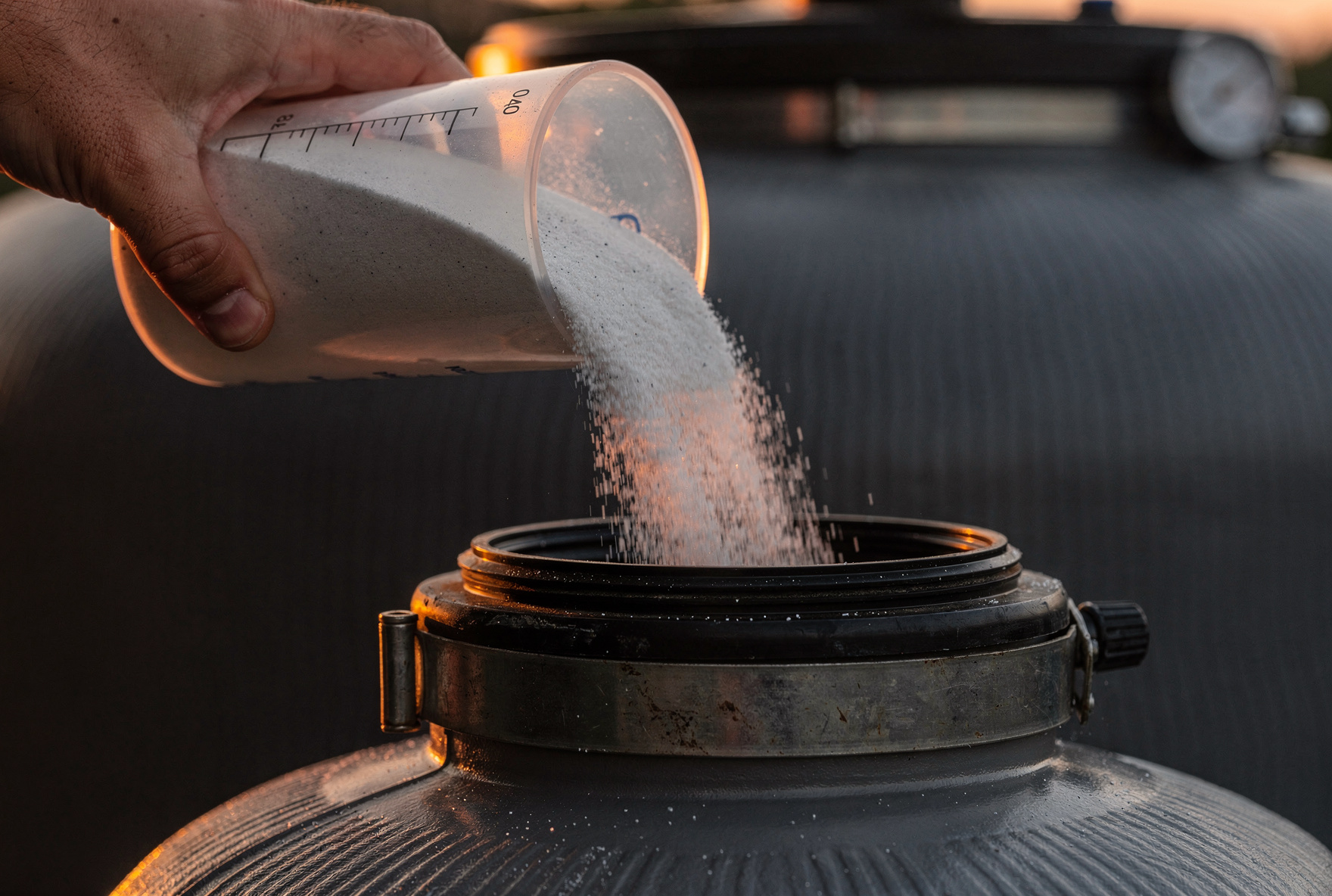
How Much Sand Does Your Pool Filter Need? A Pool Filter Sand Guide
Most residential sand filters need 100–300 pounds of pool filter sand, depending on the size of the tank. As a rule of thumb, a 16-inch tank takes about 100 pounds, a 19-inch tank about 150 pounds, and a 24-inch tank about 300 pounds. Always use #20 silica sand, and check your filter's label or manual for the exact amount.
Getting the amount right matters. Too little sand lets dirt slip through, and too much makes your filter work harder. Here's how to find your number, which filter media to choose, and how to change the sand yourself.
Why Sand Filtration Works So Well
Sand filters trap dirt and debris between the jagged grains of sand, catching particles as small as 20–40 microns. They're simple to maintain: when the pressure climbs, you backwash, and the filter is ready to go again. The sand itself lasts about 3–7 years before it needs replacing.
Cartridge filters catch smaller particles but need cleaning more often. DE filters catch the tiniest particles of all, but they cost more and take more work to maintain.
How Much Pool Filter Sand Do You Need by Tank Size?
The amount of sand depends on your filter tank's diameter. Most home filters measure 16–24 inches across. Pool filter sand is usually sold in 50-pound bags (The Pool Factory), so here's how the common sizes add up:
- 16-inch tank: 100–120 pounds (45–55 kilograms), or 2–3 bags
- 18-inch tank: about 150 pounds (68 kilograms), or 3 bags
- 19-inch tank: 150–175 pounds (68–79 kilograms), or 3–4 bags
- 20- to 21-inch tank: about 200 pounds (91 kilograms), or 4 bags
- 23-inch tank: about 250 pounds (113 kilograms), or 5 bags
- 24-inch tank: about 300 pounds (136 kilograms), or 6 bags
Sources: The Pool Factory and Pool Supplies Canada.
These are typical amounts, not a substitute for your manufacturer's number. Brands set their own specs, so a 19-inch Hayward and a 19-inch Pentair filter can call for different amounts. For example, the Hayward S166T (16-inch) takes 100 pounds, and the Hayward S210T (20-inch) takes 200 pounds. Look for the sticker on the side of the tank, or search your model number online.
Not sure of your tank size? Measure the diameter across the widest part of the tank. If it's easier to wrap a tape measure around it, divide the circumference by 3.14.
What Doesn't Change the Amount of Sand
A bigger pool, heavier use, or more trees and wind around your yard won't change how much sand your filter holds. Those things just mean you'll run the filter longer and backwash more often. The amount of sand is set by the tank, so stick with the manufacturer's number.
What Is the Best Sand for a Pool Filter?
The best sand for a pool filter is #20 silica sand made specifically for pools. It's graded to a consistent grain size that traps fine particles while still letting water flow through. You'll find it at any pool supply store.
Never use play sand, beach sand, or masonry sand. Their grains are the wrong size and shape, so dirt passes right through, and fine particles can end up back in your pool.
How to Change the Sand in Your Pool Filter
Replacing pool filter sand is a manageable DIY job that takes an afternoon. Here's how:
- Turn off the pump and drain the tank using the drain plug at the bottom.
- Remove the top or multiport valve.
- Cover the standpipe (the pipe in the center) with tape or a cap, so sand can't fall into it.
- Scoop or vacuum out the old sand, and check the laterals (the small arms at the bottom of the tank) for cracks.
- Rinse the tank to remove leftover dirt.
- Pour in the new sand slowly, keeping the standpipe centered and upright. Stop at the manufacturer's recommended amount, and don't heap it above the fill line.
- Level the sand, uncover the standpipe, and reassemble the filter.
- Backwash, then rinse to flush out sand dust before switching back to filter mode.
One last tip: don't overfill. Extra sand makes the filter work harder and disrupts water flow.
How Often Should You Replace Pool Filter Sand?
Plan to replace your pool filter sand every 3–5 years. With careful maintenance, it can last up to 7. Over time, oils, sunscreen, and minerals wear down the sharp edges of the grains. The sand can also clump or form channels that let water slip through unfiltered.
It's time for new sand if your water stays cloudy even after you shock and balance it, if the pressure rises faster than usual between backwashes, or if you're backwashing more than twice a month. Sand showing up in your pool is another sign, though it can also point to a cracked lateral.
Keep Your Sand Filter in Top Shape
A clean sand filter usually runs at about 10–15 psi. Backwash when the pressure gauge reads 8–10 psi above your normal level, which is usually every 4–6 weeks during swim season. Run the backwash until the sight glass turns clear, usually 2–3 minutes, then do a 30-second rinse before switching back to filter mode.
A sudden pressure spike usually means a clog or a sand problem. Once a year, check the tank, the multiport valve, and the connections for cracks or leaks.
Let Your Pool Help Cover Its Own Costs With Swimply
Chemicals, equipment, and new filter sand all add up. One way to offset them is hosting your pool on Swimply, where local guests rent your pool by the hour.
You set your own price, schedule, and house rules. Most pools list for $25–$100 per hour, and hosts keep 70%–80% of their booking earnings. Every booking is backed by the Swimply Protection Guarantee, which covers up to $1 million in liability and up to $10,000 in property damage. The deductible is $250 for bookings of 10 or fewer guests and $500 for larger groups, and coverage is secondary to your own insurance.
For a full look at upkeep costs, see how much it costs to maintain a pool.
Pool Filter Sand FAQ
What kind of sand goes in a pool filter?
Use #20 silica sand made for pool filters. It's graded to a consistent size that traps fine particles while letting water flow. Never use play sand, beach sand, or masonry sand.
How many bags of sand does my pool filter need?
Pool filter sand usually comes in 50-pound bags. A 16-inch filter needs about 2–3 bags, a 19-inch filter about 3–4 bags, and a 24-inch filter about 6 bags. Check your filter's label for the exact amount.
How often should I change my pool filter sand?
Every 3–5 years for most pools, or up to 7 years with good maintenance. Replace it sooner if your water stays cloudy or you're backwashing more than twice a month.
Is filter glass better than sand?
Filter glass catches smaller particles than sand (about 2–5 microns vs. 20–40 microns) and needs less backwashing. You also use about 20% less of it by weight. It costs more per bag, but many owners find the clearer water and water savings worth it.
What happens if I put too much sand in my pool filter?
Overfilling makes the filter work harder, restricts water flow, and can cause sand to blow back into the pool. Stop at the manufacturer's recommended amount, and don't heap sand above the fill line.
Keep Your Pool Clear and Stress-Free
Use #20 silica sand, follow your filter's recommended amount, and replace the sand every few years. Your filter will keep your water clear and your equipment running smoothly. And if you want your pool to help pay for its own upkeep, Swimply makes it easy to start.