How Much Does It Cost to Fill a Pool? 2026 Cost Breakdown
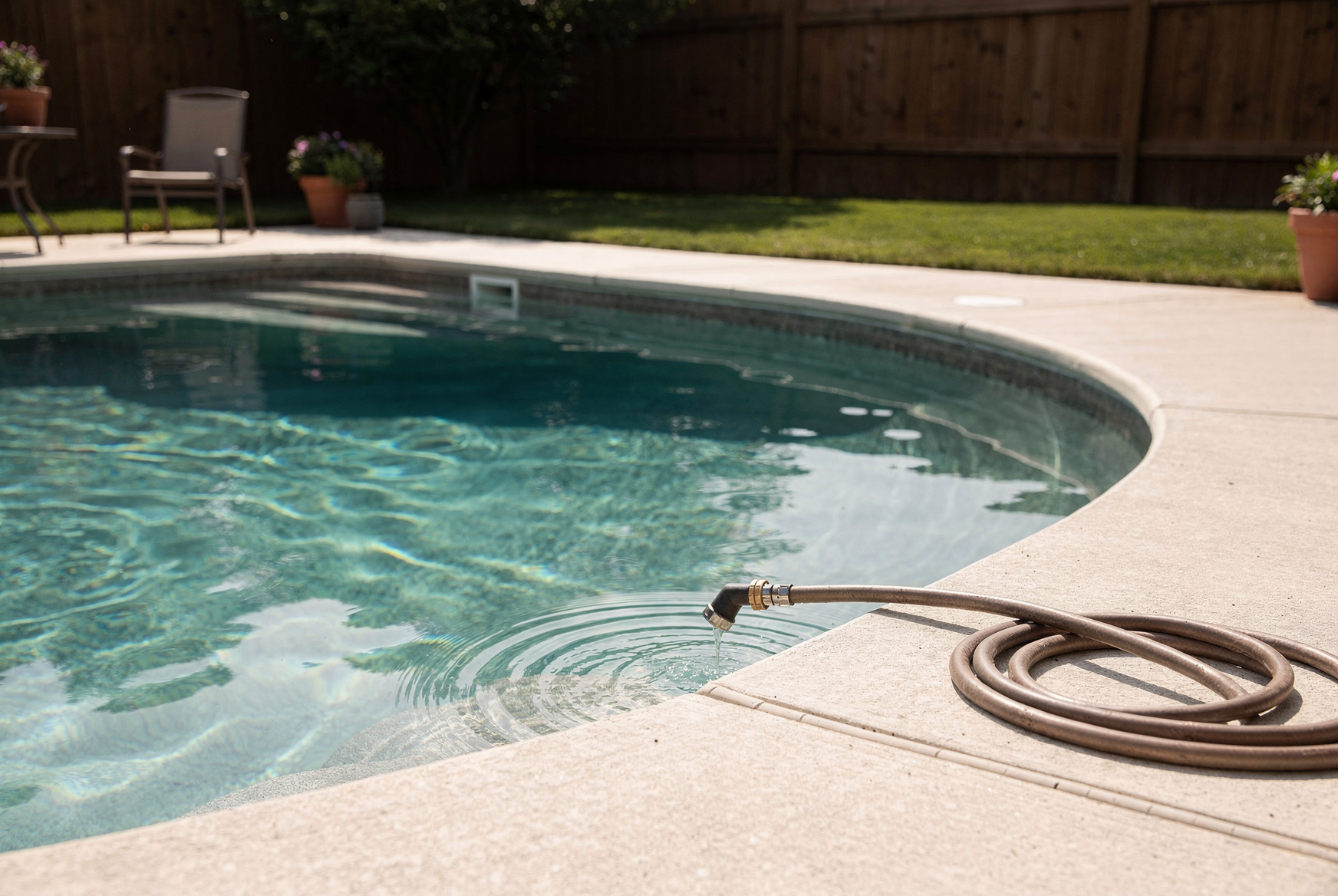
How much does it cost to fill a pool? With a garden hose and city water, expect about $20 to $300, depending on pool size. A water truck costs about $150 to $3,000 or more. Most backyard pools (10,000 to 20,000 gallons) cost $40 to $200 in water to fill by hose.
Water is only part of the bill. Sewer fees, startup chemicals, and an optional pool pro can add to the total, so this guide breaks down every cost before you grab the hose or book a truck.
Filling a Pool With Water vs. Filling In a Pool
These sound alike but are completely different jobs.
- Filling a pool with water means adding water so you can swim. That's what this guide covers, and it usually costs tens to a few thousand dollars.
- Filling in a pool means removing it for good: draining it, breaking up or hauling out the shell, then backfilling the hole with dirt or gravel and compacting it. It's a demolition project, usually needs a permit, and costs far more than a water fill.
If you're thinking about filling in a pool, get written quotes from licensed pool demolition contractors. Ask whether they're quoting a partial fill-in (shell broken up and left in place) or a full removal, since the two are priced very differently.
How Much Does It Cost to Fill a Pool in 2026?
The cost to fill a pool depends on three things: pool size, your local water rate, and whether you use a hose or a delivery truck. City water usually runs $4 to $10 per 1,000 gallons. Truck delivery runs $30 to $100 per 1,000 gallons.
Pool Fill Cost by Size
Here is a breakdown of the expected costs to fill your pool based on its size:
- Small or above-ground (5,000 to 10,000 gallons): A city water hose costs $20 to $100. A water truck delivery runs $150 to $1,000. Startup chemicals cost $23 to $50.
- Medium (10,000 to 20,000 gallons): A city water hose costs $40 to $200. A water truck delivery runs $300 to $2,000. Startup chemicals cost $50 to $94.
- Large (20,000 to 30,000 gallons): A city water hose costs $80 to $300. A water truck delivery runs $600 to $3,000. Startup chemicals cost $75 to $150.
- Extra-large (30,000+ gallons): A city water hose costs $120 or more. A water truck delivery runs $900 or more, and this often takes several loads. Startup chemicals cost $150 or more.
These estimates use $4 to $10 per 1,000 gallons for city water. Delivery usually costs $30 to $100 per 1,000 gallons. You'll also need to pay extra for sewer fees if your local utility charges them.
Typical totals with chemicals included:
- Small pool: $43–$150 by hose, $173–$1,050 by truck. Filling a small pool with a hose is easy on the wallet.
- Medium pool: $90–$294 by hose, $350–$2,094 by truck. This range covers most backyard pools.
- Large pool: $155–$450 by hose, $675–$3,150 by truck. Water and sewer rates really start to matter here, so call your utility first.
- Extra-large pool: $270+ by hose, $1,050+ by truck. Plan for extra delivery runs and a bigger chemical order.
What Costs Go Into Filling a Pool?
Not everyone pays for every item, but knowing them helps you avoid surprises.
- Water (city or well)
- Sewer or wastewater charges
- Water delivery service
- Startup chemicals
- Equipment checks or pro pool help
- Optional heating after filling
Municipal Water
Most people fill with a garden hose on city water, and it's usually the cheapest route. Municipal water typically costs $4 to $10 per 1,000 gallons.
Some cities use tiered pricing, so you pay more per gallon once you pass certain usage levels. A big pool fill can push you into a higher tier.
Sewer Fees
Many utilities bill sewer charges based on how much water you use, even though pool water never goes down the drain. Some offer a sewer credit for pool fills if you ask.
For example, Montgomery County, OH, and Charleston, SC, let you request a credit for filling a pool. Check your local rules before you start.
Pool Water Delivery
Water trucks fill a pool in hours, not days. They make sense for big pools, homes on wells, and pools that need to be ready fast.
Delivery costs $30 to $100 per 1,000 gallons, so expect $300 to $2,000 for a 10,000 to 20,000-gallon pool. Some companies charge extra for emergency service or long hose runs from the street.
Startup Chemicals
Fresh water isn't ready for swimmers. You'll need chlorine or shock, pH adjusters, alkalinity increaser, calcium, stabilizer, algaecide, and clarifier.
Startup chemical kits run $23 to $94. Very large pools and concrete shells may need more. Over a full year, chemicals land between $300 and $800 depending on pool size and type.
Pool Pro Startup Service
A pool service visit to start up a freshly filled pool costs $175 to $400. The tech checks pumps, filters, and valves and balances your chemicals. It's worth it if you're new to pools or reopening after repairs.
How to Calculate Pool Volume
You need your pool's volume in gallons to estimate fill costs. Use the formula for your pool's shape.
Rectangular Pools
Length × Width × Average Depth × 7.5
Average depth = (shallow end + deep end) ÷ 2. A 20 × 40-foot pool with 3.5 and 8-foot ends averages 5.75 feet and holds about 34,500 gallons.
Round Pools
Diameter × Diameter × Average Depth × 5.9
This works for round above-ground and plunge pools. A 24-foot round pool, 4 feet deep, holds about 13,500 gallons.
Oval Pools
Length × Width × Average Depth × 5.9
It's an estimate, but close enough for budgeting.
Is It Cheaper to Fill a Pool With a Hose or a Water Truck?
A garden hose is almost always cheaper. A water truck is much faster. Your choice depends on pool size, water access, and how soon you want to swim.
Choose a garden hose if:
- You have city water
- You aren't in a hurry
- Your pool is small or medium
- Local water rates are reasonable
- You can watch the fill
Choose water delivery if:
- You're on a well or outside city water service
- You need to swim soon
- Your pool is very large
- Your water pressure is low
- There are water restrictions in your area
Hidden Costs to Watch For
Water Restrictions
Some cities have drought rules, odd-even watering schedules, or outright bans on pool filling. Breaking them can mean a fine, so check with your water utility first.
Well Water Concerns
Running a well for 24 to 48 hours can wear out the pump and drop water pressure in your house. Well water may also carry metals or minerals that throw off your pool chemistry. For many well owners, a delivery truck is the safer choice.
Pool Surface and Equipment Check
Inspect the shell for cracks, stains, or rough spots before filling, and check pumps, filters, valves, and hoses. Repairs are much easier with an empty pool.
How Long Does It Take to Fill a Pool?
Most garden hose fills take 24 to 48 hours. It'll take longer for big pools. A water truck can fill a pool in just 1 to 3 hours.
Here's a quick look at typical fill times based on pool size and method:
- Garden hose, 5,000 to 10,000 gallons: 8 to 28 hours
- Garden hose, 15,000 to 20,000 gallons: 25 to 56 hours
- Garden hose, 25,000 to 30,000 gallons: 40 to 80 hours
- Water truck, any size: 1 to 3 hours
These times assume a hose flow of 6 to 10 gallons per minute. To get your exact time, simply divide your pool's total gallons by your hose's flow rate. The guide on how long it takes to fill a pool shows how to easily measure your flow rate with a 5-gallon bucket.
Never leave a filling pool unattended. Pressure changes can cause overflows, wasting water and raising your bill.
How Often Should a Pool Be Refilled?
Full refills are rare. Evaporation, splashing, backwashing, and small leaks lower the water level, but a full drain usually means repairs or serious water-quality problems. If you need to drain an in-ground pool, talk to a pro first to avoid shifting or cracking the shell.
Top-Ups Cost Much Less
Topping off replaces a few hundred to a couple thousand gallons at a time. For a 15,000 to 20,000-gallon pool, top-ups can add $30 to $75 a month to your water bill. A pool cover cuts evaporation and keeps that number down. For the rest of your yearly costs, see how much it costs to maintain a pool.
Simple Ways to Save Money Filling a Pool
Call the Water Company First
- Ask for your rate per 1,000 gallons.
- Ask whether you qualify for a sewer credit.
- Ask about restrictions and how the fill will show on your bill.
Fix Leaks Before Filling
- Look for wet spots or unexplained water loss.
- Repair cracks in the shell before adding water.
Balance Water Upfront
- Test fresh water before adding chemicals.
- Add products step by step, not all at once.
- Run the pump as recommended so everything mixes evenly.
Turn Pool Costs Into Pool Income
Filling a pool usually costs $20 to $300 by hose, or more by truck. After that come chemicals, cleaning, maintenance and repairs, even in months nobody swims.
Swimply lets you rent your pool to guests by the hour, and the earnings can cover fills, chemicals or bigger projects. As one host says, “Our pool used to cost money just sitting there. Now it brings in income and gets used every day.”
- Most listings go for $25 to $100 per hour for a set group size, and you can add extra-guest fees.
- Hosts keep 70 to 80% of booking earnings.
- Every booking includes Swimply's Protection Guarantee: up to $1 million in liability and up to $10,000 in property damage coverage, secondary to your own insurance.
- Listing your pool is free, and you set your own hours, prices and house rules.
See what hosting on Swimply looks like and let your pool start paying for itself.
Pool Filling FAQ
How much does it cost to fill a pool with a garden hose?
Filling a pool with a garden hose costs about $20 to $300, based on city water at $4 to $10 per 1,000 gallons. A typical 10,000 to 20,000-gallon backyard pool costs $40 to $200 in water. Sewer fees can add to that unless your utility offers a pool-fill credit.
Is it cheaper to fill a pool with a hose or a water truck?
A garden hose is almost always cheaper. City water costs $4 to $10 per 1,000 gallons, while truck delivery costs $30 to $100 per 1,000 gallons. A truck is worth it when you need the pool fast, are on a well, or have very low water pressure.
How much does a water truck cost to fill a pool?
Pool water delivery costs $30 to $100 per 1,000 gallons. That works out to about $300 to $2,000 for a 10,000 to 20,000-gallon pool. Large pools may need several loads, and some companies charge extra for rush service or long hose runs.
Can I get a sewer credit for filling my pool?
Sometimes. Many utilities bill sewer charges based on water use, but some give a credit for pool fills because that water never enters the sewer. Montgomery County, OH and Charleston, SC both offer one. Call your water company before you fill.
How long does it take to fill a pool?
Most pools take 24 to 48 hours to fill with a garden hose, and larger pools can take longer. A water truck can fill a pool in 1 to 3 hours. To estimate your own time, divide your pool's volume in gallons by your hose's flow rate in gallons per minute.