Above-Ground Pool Cost 2026: Prices by Type and Install
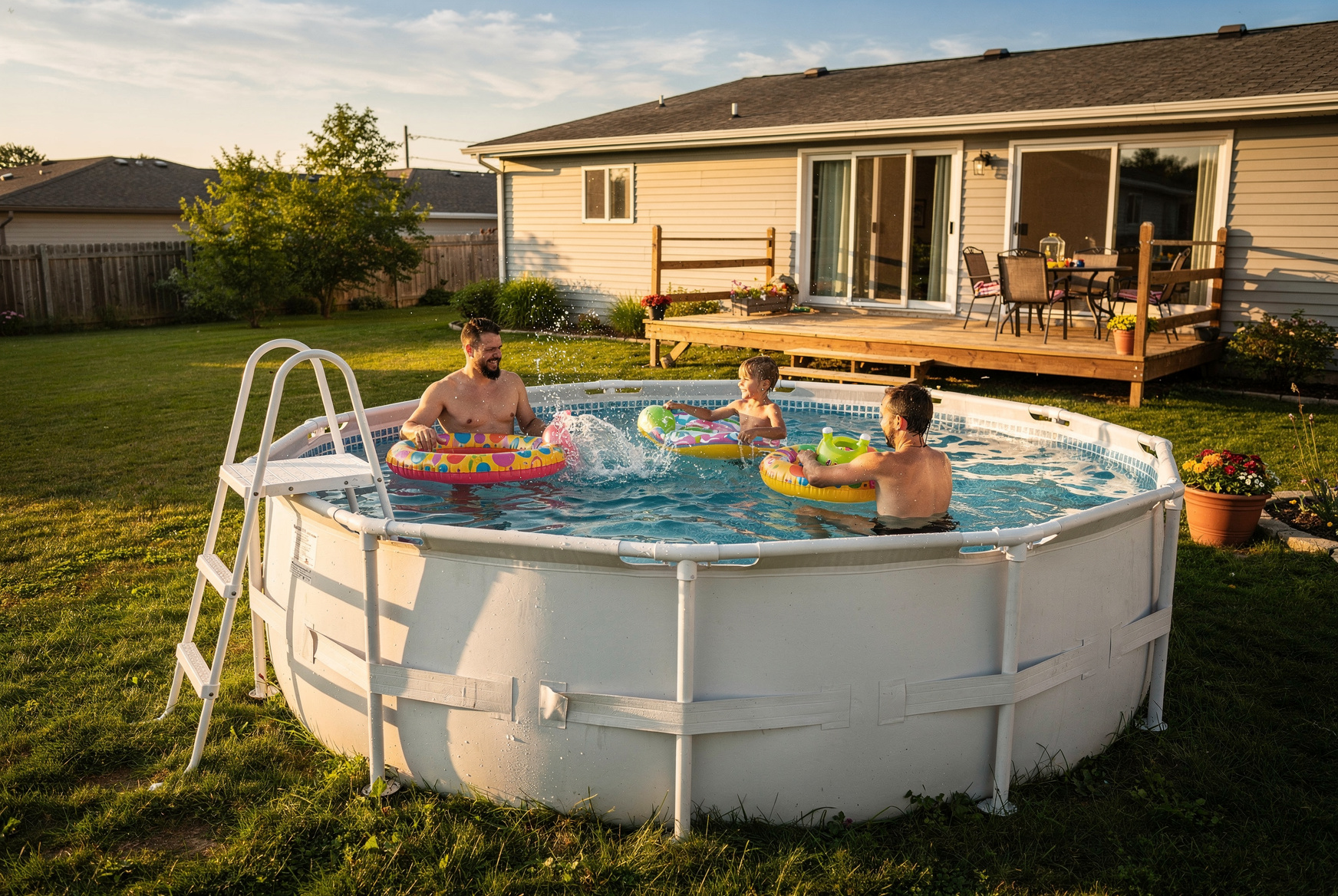
Above-Ground Pool Cost: The Complete Price Guide for 2026
How much does an above-ground pool cost? In 2026, expect a total above-ground pool cost of $1,500 to $15,000+, from a basic DIY setup to a fully installed pool with upgrades. Add a deck, a heater, or landscaping, and the total can top $20,000.
The pool's sticker price is only the start. Installation, site prep, equipment, and ongoing maintenance all add to the bill. Here's what each piece costs, so you can build a realistic budget.
Above-Ground Pool Prices at a Glance
Here's what each pool type costs, both for the pool alone and installed. Installed prices add typical professional installation of $1,000–$3,000 and don't include site prep, electrical work, or permits.
- Inflatable and easy-set pools
- Pool only: $100–$1,000
- Installed: usually set up yourself, so no installation cost
- Steel-frame pools
- Pool only: $500–$4,000 (most kits run $1,000–$3,500)
- Installed: about $1,500–$7,000
- Resin pools
- Pool only: $1,500–$3,700
- Installed: about $2,500–$6,700
- Hybrid (steel and resin) pools
- Pool only: $2,000–$8,000
- Installed: about $3,000–$11,000
- Aluminum and high-end hard-sided pools
- Pool only: $4,000–$12,000+
- Installed: about $5,000–$15,000+
Big, oval, or complex installs can push professional labor to $5,000+.
What Affects Above-Ground Pool Cost?
A small round pool in a flat yard costs far less than a large oval pool on a slope. These are the biggest price drivers:
- Size and depth
- Shape (round vs. oval)
- Wall material (inflatable, steel, resin, hybrid, or aluminum)
- Liner quality
- Brand and warranty
- DIY vs. professional installation
- Local labor rates and permit rules
- Yard access, slope, and prep work
Above-Ground Pool Prices by Type
Inflatable and Easy-Set Pools
These cost $100–$1,000. They're the cheapest way to get a pool in your yard and the easiest to set up yourself. The trade-off is that they don't last long and are hard to repair.
Steel-Frame Pools
Steel-frame pools cost $500–$4,000, and most kits run $1,000–$3,500. Kits usually include a pump, a ladder, and a filter. Steel needs care to prevent rust over time.
Resin and Hybrid Pools
Pure resin pools cost $1,500–$3,700. Hybrid pools, which combine steel and resin, cost $2,000–$8,000. Resin resists rust and heat and needs fewer repairs, so it tends to last longer than steel alone.
Aluminum Above-Ground Pools
Aluminum pools are the priciest option at $4,000–$12,000+. They're lightweight, won't rust, and are built to last season after season.
How Much Does Above-Ground Pool Installation Cost?
Professional installation costs about $1,000–$3,000 for most pools, with an average of about $1,500. Large or complex jobs can run $5,000+. Oval pools and sloped yards usually cost more.
Read every quote closely. Some leave out site prep, the sand base, electrical work, or permits.
DIY Installation
Going DIY saves on labor, but you'll still need to budget for sand, leveling, and tools. Soft-sided and inflatable pools are the easiest to install yourself. Resin and metal-frame pools are harder.
A few cautions:
- Leveling mistakes can damage walls and liners.
- Electrical work should always go to a licensed professional.
Professional Installation
Expect about $1,500 for an average job and about $3,000 for a high-end one. Labor rates vary by city and season, so booking early helps you avoid peak summer prices.
Site Prep and Backyard Costs
- Yard leveling: $300–$3,400, depending on the slope
- Sloped yards: add about $1,500–$3,500 on average
- Electrical circuit for a pump or heater: $100–$1,500+
- Permits (if required): usually $100–$300, though some areas charge up to $500
Other prep costs to plan for: sod or grass removal, a sand, stone-dust, or foam base, drainage, tree work, and fence or gate changes.
Permits and Local Rules
Rules vary by location. Deeper pools often need a permit, and many areas also have rules on fencing, gate latches, electrical work, and setbacks. Check with your local building department before you buy.
Equipment and Accessory Costs
Must-Have Equipment
- Pump and filter: $150–$1,500
- Ladder or steps: $100–$800
- Liner: $200–$1,500
- Ground pad or base: $100–$800
- Skimmer and cleaning tools: $50–$300
- Starter chemicals: $50–$200
- Cover: $50–$500
Nice-to-Have Upgrades
- Heater: $500–$3,000+
- Saltwater system: $300–$1,500
- LED lights: $50–$500
- Automatic cleaner: $200–$1,000
- Deck jets or water features: $200–$2,000+
- Games, floats, and lounge gear: varies
How Much Does an Above-Ground Pool Deck Cost?
Basic Pool Area Setup
A simple setup can cost just a few hundred dollars: a gravel or mulch border, simple steps, a couple of lounge chairs, a storage bin, and a solar cover.
Resort-Style Backyard Setup
- Above-ground pool deck: $2,000–$10,000+
- Wraparound deck: $5,000–$15,000
From there, you can add a dining or grill area, a pergola, lighting, privacy screens or fencing, and pet-friendly touches.
Monthly and Yearly Maintenance Costs
- Chemicals: $20–$100 per month
- Pump electricity: $10–$50+ per month
- Water top-offs: $10–$30 per month
- Professional service (optional): $85–$200+ per month
As a rule of thumb, budget about 10% of your pool's purchase price each year for maintenance. For a full breakdown, see how much it costs to maintain a pool.
Seasonal Opening and Closing
- Opening service: $150–$400
- Closing service: $150–$400
You'll also need a winter cover, air pillows, and winter chemicals. Closing the pool properly protects the liner, pump, and filter from freezing.
Common Repairs and Replacements
- Liner replacement: $500–$2,500 installed, about every 6–10 years
- Pump: $200–$1,200
- Filter: $150–$1,000
- Ladder or steps: $100–$800
Set aside $500–$1,000 a year for repairs. For more on liners, see how long pool liners actually last and the pool liner replacement cost guide.
Above-Ground vs. Inground Pool Cost
Above-ground pools cost a fraction of inground pools and install much faster. Here's how inground pools compare:
- Vinyl-liner inground pool: $45,000–$65,000
- Fiberglass inground pool: $55,000–$85,000
- Concrete inground pool: $75,000–$120,000+
Inground pools offer more design options and can add to your home's value. For full inground pricing, see How Much Does a Pool Cost in 2026?
How to Save Money on an Above-Ground Pool
- Shop in fall or winter, when prices dip.
- Compare what each kit includes, such as the pump, filter, ladder, and cover.
- Add decking later instead of all at once.
- Choose the right size for how you'll actually use it.
- Buy a good cover to cut heating, cleaning, and chemical costs.
- Keep your water balanced to protect the liner and equipment.
- Get at least three installation quotes.
- Don't cut corners on leveling or electrical work.
Sample Above-Ground Pool Budgets
- Budget setup: $1,000–$3,000 total
- Mid-range setup: $5,000–$10,000 total
- Premium setup: $12,000–$25,000+ total
Is an Above-Ground Pool Worth It in 2026?
For most families who swim often, yes. Say your family of four swims about 50 times a summer. If each swim replaced a $30-per-person water park ticket, that's $6,000 a season. A $7,000 mid-range pool could come close to paying for itself in one or two summers.
Real savings depend on how often you'd actually go somewhere else. Even so, having a pool in your backyard three or four times a week is hard to beat.
Can Renting Out Your Pool Help Cover the Cost?
Yes. On Swimply, you rent your pool to local guests by the hour for family swims, parties, and pet play dates. Becoming a Swimply host is free, and here's how it works:
- You set the price: Most listings run $25–$100 per hour, depending on the pool and group size. You can also add extra-guest fees.
- You keep 70%–80% of your booking earnings.
- You set the rules: Choose your own schedule, availability, and house rules.
- You're protected: The Swimply Protection Guarantee covers up to $1 million in liability and up to $10,000 in property damage per booking. The deductible is $250 for bookings of 10 or fewer guests and $500 for larger groups, and the coverage is secondary to your own insurance.
Above-Ground Pool Cost FAQ
What is the cheapest type of above-ground pool?
Inflatable and easy-set pools are the cheapest, at about $100–$1,000, and most owners set them up themselves. They don't last as long as framed pools. For a longer-lasting budget option, steel-frame kits usually cost $1,000–$3,500.
How much does an above-ground pool with a deck cost?
A basic above-ground pool deck costs about $2,000–$10,000+, and a wraparound deck costs $5,000–$15,000. Add that to the pool and installation, and a premium setup with a deck typically lands at $12,000–$25,000+.
How much does it cost to install an above-ground pool?
Professional installation usually costs $1,000–$3,000, with an average of about $1,500. Large or complex jobs can run $5,000+. Site prep, electrical work, and permits are often extra.
How long do above-ground pools last?
The liner is usually the first thing to wear out. Above-ground vinyl liners typically last 6–10 years and cost $500–$2,500 installed to replace.
Is an above-ground pool worth it?
For families who swim often, usually yes. A mid-range pool costs about $5,000–$10,000 total, far less than an in-ground pool at $45,000+, and frequent swims can offset much of that compared with paid outings. Renting your pool on Swimply can help cover the rest.
Do you need a permit for an above-ground pool?
It depends on where you live. Deeper pools often need a permit, which usually costs $100–$300 and up to $500 in some areas. Many places also have rules on fencing, gate latches, electrical work, and setbacks, so check with your local building department first.
Ready to Plan Your Pool?
An above-ground pool is one of the most affordable ways to bring summer home. Budget for the full picture, including the pool, installation, site prep, equipment, and yearly upkeep, and you'll avoid surprises.
Once it's up and running, let your pool help pay for itself. See what hosting on Swimply could do for you.