Is Renting Someone's Indoor Pool Safe? House Rules, Supervision, and What's Covered
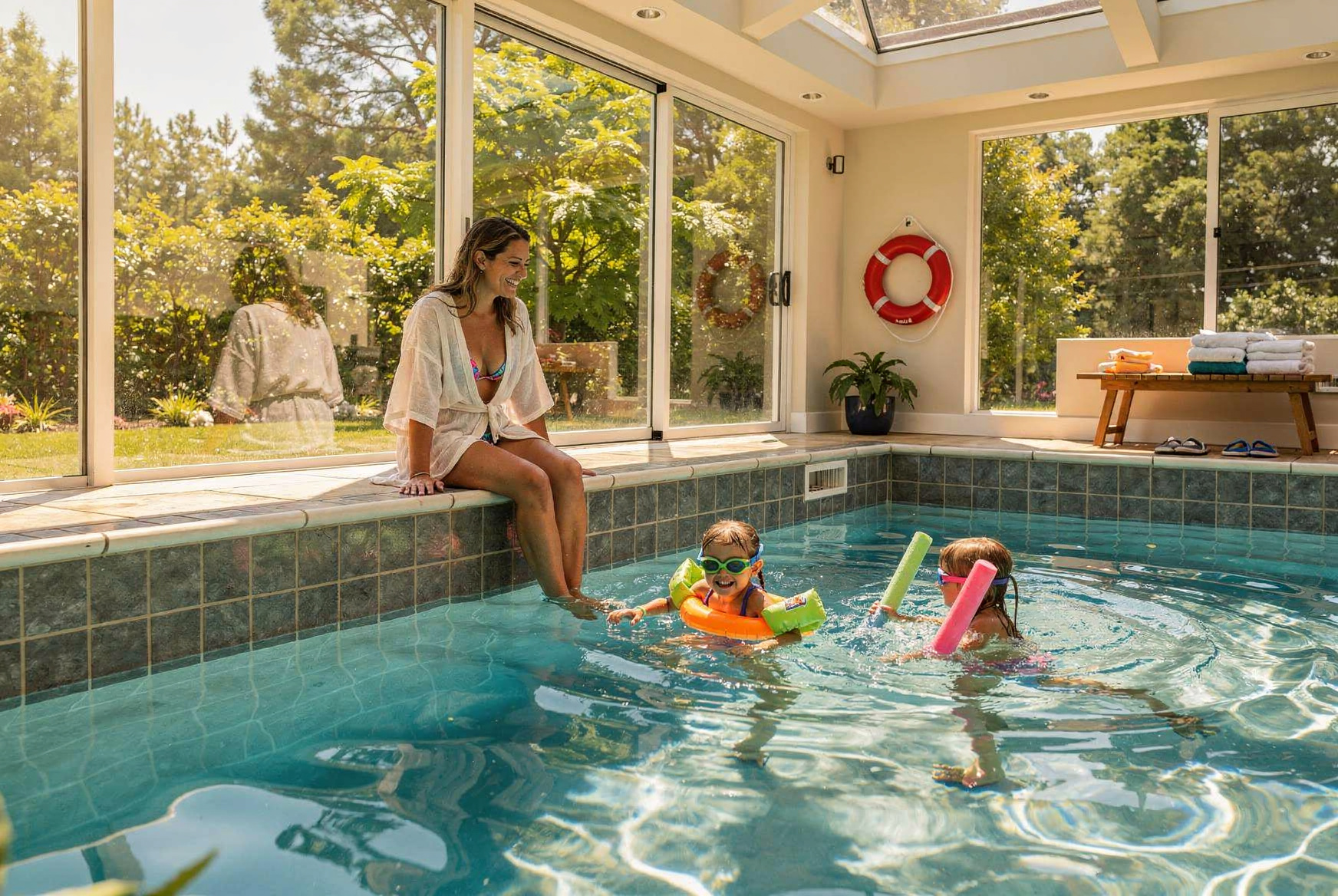
Short answer: yes, renting someone's indoor pool is safe when you book through a platform that checks its hosts, spells out the house rules, and backs every reservation with real protection. On Swimply, every host and listing gets reviewed before it goes live, and hosts must post "no lifeguard on duty" signage.
The Swimply Protection Guarantee also backs eligible bookings with up to $1 million in host liability protection. The rest comes down to you: reading the rules, asking a few smart questions, and keeping eyes on the water.
So if you're wondering "is it safe to rent a private pool," especially an indoor one in the off-season, here's the full scoop. This guide covers what makes indoor pools different, which house rules to expect, who's responsible for supervision, and exactly what's covered if something goes sideways.
Why indoor pools are their own thing
Indoor pools are the dream in October or February. They're heated, sheltered, and totally private, which is why indoor pools on Swimply book up fast once the weather turns. But the enclosed space changes a few things worth knowing.
- Air quality: Chlorine reacts with sweat and body oils to form chloramines, the stuff behind that sharp "pool smell." Outdoors it drifts away. Indoors it needs good ventilation, so a strong chemical odor or stinging eyes is a sign the air isn't moving enough. The CDC's Healthy Swimming program has more on why that smell means the room needs fresh air, not more chlorine.
- Humidity and slippery floors: Indoor decks stay wet longer because there's no sun to dry them. Tile and concrete get slick, so walk, don't run, and pack water shoes for kids.
- Warmer water: Indoor pools often run warmer than backyard pools, usually somewhere in the low-to-mid 80s°F. That's lovely for lounging, but it's easy to overheat during hard play. Take water breaks like you would outside.
- Tighter space: Indoor pool rooms often have less deck area than a backyard. Check the listing's guest limit closely. Eight people fit differently in a pool house than on a lawn.
None of these are dealbreakers. They're just the reason a good host keeps the ventilation running, wipes down the deck between bookings, and lists the water temperature right in the description.
What Swimply checks before you ever show up
The biggest safety difference between a Swimply rental and a random pool from a classifieds post is the vetting. Here's what happens behind the scenes before a listing appears in your search results.
- Every host and listing is reviewed before going live. Swimply reviews each host's identity and risk profile. Verified hosts may have uploaded a driver's license or passport, proven they live at the property, and completed at least one successful booking. Here's how to spot a trusted host.
- Listings have to be honest. Hosts must use real photos, provide an accurate address, and disclose any hazards on the property.
- Background screening. Swimply uses a third-party system to screen for past criminal activity, and a Trust & Safety team monitors for suspicious activity.
- Reviews come from real swims only. Only guests who completed a reservation can leave a public review. That means a listing with 40 five-star reviews has hosted 40 actual bookings, not 40 friends of the host.
Reviews are your best friend here. Guests routinely call out the things that matter, like Judy's note on one listing: "Clean, easy parking, convenient bathroom, friendly host." On an indoor/outdoor listing, Thomas described the host as "very attentive and easy to work with." Look for words like clean, responsive, and attentive. Those are safety signals dressed up as compliments.
House rules: what to expect and why they exist
Every host sets their own rules, and they show up right on the listing page before you book. They're not there to kill the vibe. They're how a host keeps their pool clean, their neighbors happy, and your group covered under the guarantee.
Common rules you'll see on indoor pool listings:
- Guest count limits: Hosts pick a maximum capacity, from family-size (1 to 10) up to large events (51+). Book for your real headcount. Extra guests aren't covered by property protection, and hosts can end a booking that blows past the limit.
- Kids and infants: Some hosts welcome babies and toddlers, others are adults-only. Where children are allowed, Swimply's Water Safety Guidelines require they're continuously supervised, kept within arm's reach, and never left alone in the pool area.
- Alcohol: Hosts can allow it or ban it. If it's allowed, follow local law and don't serve anyone who's driving. Heads up: injuries tied to alcohol aren't covered under the Protection Guarantee, so a dry swim is the safest swim.
- Pets: Hosts decide whether pups can come and whether they can hop in the water. Check pet-friendly listings if you're planning a paw party.
- Smoking, music, and vendors: Many hosts prohibit smoking, DJs, catering, and loud music. Indoor pool rooms echo, so volume rules tend to be stricter than backyards.
- Bathroom and access: The listing will say whether you have bathroom access and how you get in (side gate, keypad, host greeting you at the door). If it doesn't, ask.
Breaking house rules isn't just rude. Violations of Swimply's Terms are excluded from the guarantee, so following the rules is literally what keeps everyone protected.
Who's watching the water? Supervision, explained
Here's the part every parent needs to hear clearly: there's no lifeguard at a private pool rental. Hosts are required to post "no lifeguard on duty" signage, and Swimply's Terms state that the guest who brings a minor takes sole responsibility for supervising them during the booking. The host isn't in the pool room watching your kids. You are.
Swimply's own water safety guidance lays out how to do that well:
- Name a Water Guardian. One adult, phone down, drink down, whose only job is watching the water. Rotate every 15 to 20 minutes so nobody zones out. The American Red Cross calls this the "water watcher" and considers it non-negotiable around kids.
- Stay within arm's reach of little ones. The American Academy of Pediatrics recommends "touch supervision" for toddlers and young or weak swimmers. That means close enough to grab, not close enough to see.
- Life jackets for non-swimmers. Use U.S. Coast Guard-approved jackets, not pool noodles or arm floaties. Jackets don't replace an adult, they just buy you a second.
- Have a CPR-certified adult in your group. Swimply highly recommends it. Many hosts also keep a first-aid kit, reaching pole, and life ring on deck.
- No running on indoor decks. Wet tile is the number one way an indoor swim goes wrong. Set the rule before anyone gets in.
Want a pro on deck? Add a certified lifeguard
If your group has lots of kids or mixed swimming ability, you can add a certified lifeguard at checkout through Swimply's partner AquaMobile. It runs $70 per hour with a two-hour minimum, and every guard is certified in CPR, First Aid, and Water Rescue. For a kids' birthday party at an indoor pool, that's often the best $140 you'll spend.
What's actually covered: the Swimply Protection Guarantee
This is where a lot of "is it safe to rent a private pool" worries really live. Here's what the Swimply Protection Guarantee does on eligible bookings in the US, Canada, and Australia.
- Up to $1 million in host liability protection. If a guest is injured on the host's property during a booked-and-paid reservation and brings a claim, the guarantee protects the host up to $1 million (USD/CAD, or AUD for Australian hosts). It applies to indoor and outdoor pools, plus properly installed slides, compliant diving boards, grills, fire pits, and yard games.
- Up to $10,000 in property damage protection. If your group accidentally damages the pool, equipment, or furniture and can't cover it, the host can be reimbursed up to $10,000. There's a $250 deductible for groups of 10 or fewer and $500 for larger groups.
- It's secondary protection. Hosts must carry their own homeowner's or liability coverage first. The guarantee kicks in after that.
Now the fine print that affects guests directly. The guarantee doesn't cover:
- Anything that happens outside your booked reservation time
- Injuries involving alcohol or other substances
- Trampolines, bounce houses, inflatables, saunas, and steam rooms
- Pet-related injuries
- Ticketed events or gatherings that charge admission
- Bookings paid or arranged off the platform
That last one matters most. If a host offers you a "cash discount" to book directly, say no. Off-platform bookings aren't protected, and Swimply Support can't help with a conversation it can't see. Keep every message in Swimply Chat.
Your pre-booking checklist for an indoor pool
You can message any host before you book by hitting Contact Host on the listing. Five minutes of questions saves you from surprises on the day. Here's what to ask or confirm for an indoor pool specifically:
- Water temperature and room temperature. Good hosts list both. Ask if they don't.
- Ventilation. "Is there a dehumidifier or air system running during bookings?" A clear yes is what you want.
- Depth and layout. Ask for the shallow and deep end depths, and whether there's a ledge or steps for little kids.
- Safety gear on site. First-aid kit, reaching pole, life ring, and whether the drain covers are compliant. Hosts are asked to check drain covers regularly and keep pool chemicals locked up.
- Access and bathroom. How do you get in, is there a changing area, and is the bathroom included in the booking?
- Cleaning between bookings. Hosts are expected to wipe down decks, dry chairs, and sanitize high-touch areas between groups. A quick "how often is the water tested?" is a fair question too. For reference, the CDC recommends free chlorine of at least 1 ppm and a pH between 7.2 and 7.8 for pools.
- Cancellation policy. Hosts pick one of three: Cancel Anytime (full refund up to 2 hours before), Very Chill (24 hours), or Kinda Chill (72 hours). It's shown at checkout, so read it before you pay.
Bonus: indoor pools are weather-proof, so you skip the rain-check drama entirely. If you're comparing an indoor pool to a backyard rental for a fall gathering, that reliability alone is often the tiebreaker.
If something goes wrong during your swim
Most bookings end with wet towels and happy kids. But here's the playbook just in case:
- Emergency? Call local emergency services first, always. Then notify Swimply.
- Pool isn't as described or isn't clean? Take photos, message the host in Swimply Chat, and contact Customer Care within 24 hours. If you want a full refund, leave the property and document it before you go.
- Injury or damage? Gather photos, video, and any medical or repair records, then file with Community Care within 72 hours for a guarantee claim.
- Weather cuts a partial-indoor booking short? Message the host right away to reschedule. If you both agree on a refund or make-up swim, Support will honor it.
Swimply Support is available around the clock through the Help button in the app, and guests can expect a response within six hours on standard issues. Priority support comes with the Premium Pass if you book often.
Frequently Asked Questions
Is it safe to rent a private pool for kids?
Yes, with the right setup. Choose a listing that allows children, name a Water Guardian who stays within arm's reach of little ones, put non-swimmers in Coast Guard-approved life jackets, and consider adding a certified lifeguard for $70 per hour. Remember there's no lifeguard unless you book one.
Does Swimply cover guests if they get hurt?
The Swimply Protection Guarantee provides hosts with up to $1 million in liability protection when a guest brings an injury claim from an eligible reservation. It's not a direct medical benefit for guests, and it excludes alcohol-related injuries, off-platform bookings, and injuries outside the booked time.
Are indoor pools cleaner than outdoor pools?
Often, yes. No leaves, bugs, or sun burning off chlorine. But they need good ventilation to keep chloramine levels down. If the room smells strongly of chemicals or your eyes sting, mention it to the host and step out for fresh air.
Can the host watch us while we swim?
Some hosts stay home and are available, but they're not lifeguards and aren't responsible for supervising your group. Under Swimply's Terms, the guest who brings minors is responsible for their supervision throughout the booking.
Do hosts have to be private homeowners?
Yes. Swimply is for private residential pools only. Public and commercial pools can't be listed, which is exactly why you get the whole space to yourself.
The bottom line on indoor pool rentals
Renting someone's indoor pool is safe when you treat it like what it is: a private pool by the hour, with a verified host, clear house rules, and real protection behind the booking. Read the rules, ask your questions in Swimply Chat, keep an adult on water duty, and skip the off-platform deals. Do that and you get the heated, crowd-free swim a hotel pool can't touch, at a fraction of what you'd pay to rent a whole house for the night.
Ready to swim year-round? Browse indoor pools near you, or check out heated pools for a backyard option that stays warm even if the weather isn't.