Can Dogs Swim in Chlorine Pools? Vet-Backed Safety Guide
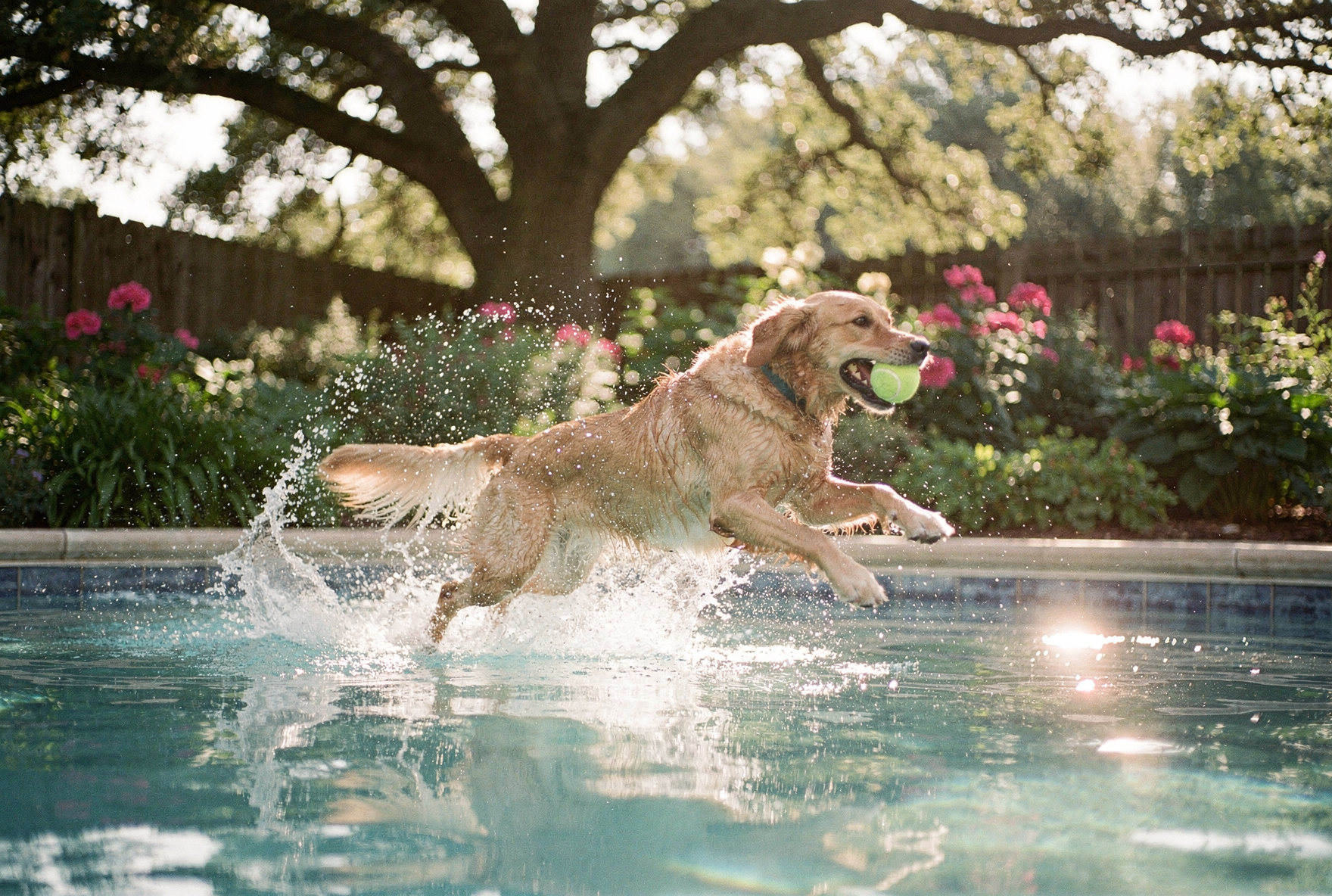
Can Dogs Swim in Chlorine Pools? A Safety Guide for Dog Owners
Can dogs swim in chlorine pools? Yes, dogs can safely swim in properly maintained chlorine pools. Most pools keep chlorine at 1–3 parts per million (ppm), which is fine for both people and pups.
That matches what the American Kennel Club's Chief Veterinarian, Dr. Jerry Klein, says: "The amount in a pool is negligible, but the toxic concerns are with dogs getting into chlorine tablets" (AKC). In other words, the water itself is rarely the problem. Undiluted pool chemicals, gulping lots of water, and long swims without breaks are.
Here's what to know about chlorine levels, what to watch for, how to care for your dog after a swim, and where to find a private, dog-friendly pool.
Is Chlorine Safe for Dogs? What to Know
Chlorine keeps pool water free of bacteria, algae, and parasites. That's good for your dog, too. A pool with too little chlorine can grow the very germs you don't want your pup swimming in (AKC).
The bigger factor is balance. When chlorine runs too high or pH drifts out of range, the water is more likely to irritate skin and eyes, for dogs and people alike.
What Chlorine Level Is Safe for Dogs?
A well-maintained pool at normal chlorine levels is generally fine for dogs. Here's how to read the numbers:
- Below 1 ppm (too low): Not ideal for anyone. Low chlorine lets bacteria, algae, and parasites grow. What to do: bring the pool back into range before anyone swims, dogs included.
- 1–3 ppm (normal range): Generally safe for dogs. This is the standard range for most residential pools. What to do: let your dog swim, supervise, and rinse them off afterward.
- Above 3 ppm (high): More likely to irritate skin, eyes, and paws. [CONFIRM SOURCE: a vet or pool-industry source for a specific "too high for dogs" threshold, if Swimply wants to name one] What to do: skip the swim until levels drop back into the normal range.
- Right after shocking the pool: Chlorine levels are temporarily very high. What to do: keep dogs out until a test shows chlorine is back to 1–3 ppm.
- Chlorine tablets, granules, or shock product (undiluted): Not safe. This is the biggest chlorine risk for dogs, according to the AKC. What to do: store all pool chemicals sealed and out of reach. Call your vet right away if your dog gets into them.
Not sure what your pool reads? A simple test strip takes seconds. If you're booking someone else's pool, ask the host when the water was last tested.
Potential Risks to Watch For
Most dogs swim in chlorinated pools with no problems. Still, keep an eye out for these:
Skin, Eye and Paw Irritation
Watch for redness, itching, flaking skin, or a rash after swimming. Red or watery eyes and itchy or swollen paws can also be signs the water isn't agreeing with your dog. Dogs with sensitive skin or eyes may react more than others.
Ear Infections
Dogs with floppy ears are more prone to ear infections because moisture gets trapped in the ear canal after swimming (AKC). Drying their ears after every swim helps.
Drinking Too Much Pool Water
A few laps of pool water usually won't hurt. Large amounts can cause stomach upset, vomiting, and irritation (AKC). In rare cases, dogs that swallow a lot of any water can develop water intoxication. Signs include vomiting, lethargy, bloating, loss of coordination, drooling, pale gums, and glazed eyes. Call your vet if you see these.
If your dog keeps drinking from the pool, take a break out of the water and offer fresh water instead.
After the Swim: Rinse, Dry, Check
A two-minute routine after every swim keeps chlorine from sitting on your dog's coat and skin.
- Rinse: Hose or shower your dog with fresh water to wash out leftover pool chemicals (AKC). Pay attention to paws, belly, and armpits.
- Dry: Towel off their coat, then gently dry the outside of the ears with a soft towel or cotton ball. Don't push anything into the ear canal.
- Check: Look over skin, eyes, and paws for redness, rash, or itching. Check for any cuts on paw pads from the pool edge or deck.
- Hydrate: Offer fresh, cool water in the shade.
- Watch: Keep an eye out for vomiting, lethargy, or unusual behavior over the next few hours. If anything seems off, call your vet.
Simple Safety Tips for Swimming with Dogs
- Never leave your dog unattended in or near the pool.
- Start short: Try 5–10 minute swims and build up gradually. [CONFIRM SOURCE: vet source for session length]
- Show them the exit: Teach your dog where the steps or ramp are. First-time swimmers often struggle to get out (AKC).
- Don't force it: Not every dog loves water. As Dr. Klein puts it, dogs "that don't can be encouraged, but should not be forced" (AKC). Never throw a dog into a pool.
- Use a life jacket for small dogs, older dogs, and weaker swimmers.
- Keep fresh water nearby and take shade breaks on hot days to avoid overheating.
- Check the pool rules: If you're visiting someone else's pool, check the listing and message the host if you're not sure dogs are allowed.
Can Puppies Swim in Chlorine Pools?
Puppies can swim once they're old enough, but take it slow.
- Wait until they're ready: A common guideline is to wait until puppies are about 3–4 months old. [CONFIRM SOURCE: the current post links a retailer guide (barclondon.com) for this; replace with a vet source or remove "vets say"]
- Never swim puppies under 8 weeks old. [CONFIRM SOURCE]
- Vaccines first: Make sure your puppy is up to date on vaccinations before swimming in shared or public water.
- Stay shallow: Start in shallow water and hold your puppy as they get used to it.
- Keep it short: Try 2–3 minute swims at first. [CONFIRM SOURCE]
- Supervise closely, every time.
Where Can My Dog Swim? Try a Private, Dog-Friendly Pool
Public pools rarely let dogs in, and crowded dog parks aren't for every pup. A private pool rental gives your dog room to splash without the crowds.
On Swimply, you can book a private pool by the hour from local hosts. Look for pools in the Pet Swim category, or browse all pet-friendly pools on Swimply. Pools on Swimply usually list for $25 to $100 per hour, depending on the pool and group size.
Before you book:
- Check the listing for the host's pet rules, and message the host if anything's unclear.
- Look for helpful features like a fenced yard, steps or a gradual entry, and shade.
- Ask when the water was last tested if you want to confirm chlorine levels.
For more tips on picking the right spot, read the ultimate guide to dog-friendly pools.
Can Dogs Swim in Chlorine Pools? FAQ
Is a saltwater pool better than a chlorine pool for dogs?
Not necessarily. Saltwater pools still contain chlorine. A salt cell turns salt into chlorine, so the same rules apply: keep levels balanced, rinse your dog afterward, and don't let them drink much pool water. Some owners find saltwater gentler on skin. [CONFIRM SOURCE: vet source on saltwater vs chlorine pools for dogs] Learn more in Do Salt Water Pools Have Chlorine?
Can puppies swim in chlorine pools?
Yes, once they're old enough and vaccinated. A common guideline is to wait until about 3–4 months, start in shallow water, keep the first swims to a few minutes, and supervise closely. [CONFIRM SOURCE]
Is it bad if my dog drinks pool water?
A small amount of properly chlorinated pool water usually isn't harmful. Drinking a lot can cause vomiting and stomach irritation, and in rare cases, water intoxication. Offer fresh water and take breaks if your dog keeps drinking from the pool.
Can chlorine irritate my dog's skin?
Yes, especially if chlorine levels are high or pH is off. Look for redness, itching, flaking, or a rash. Rinsing with fresh water after every swim helps. If irritation doesn't clear up, check with your vet.
How long can dogs swim in a chlorine pool?
Start with 5–10 minute sessions and build up gradually, with breaks for fresh water and shade. Puppies should start with just 2–3 minutes. Stop sooner if your dog seems tired or keeps drinking pool water. [CONFIRM SOURCE]
Make a Splash With Your Pup
So, can dogs swim in chlorine pools? Absolutely, as long as the pool is well maintained and you follow a few simple habits: supervise, keep sessions short, rinse and dry afterward, and keep pool chemicals locked away.
Ready to give your dog a day in the water? Find a pet-friendly pool on Swimply and book a private swim near you.